Streaming War Escalates: Disney+ and Netflix Announce Surprise Co-Production Deal for New Sci‑Fi Franchise

# Streaming War Escalates: Disney+ and Netflix Announce Surprise Co-Production Deal for New Sci‑Fi Franchise

**By Staff Writer — Entertainment**

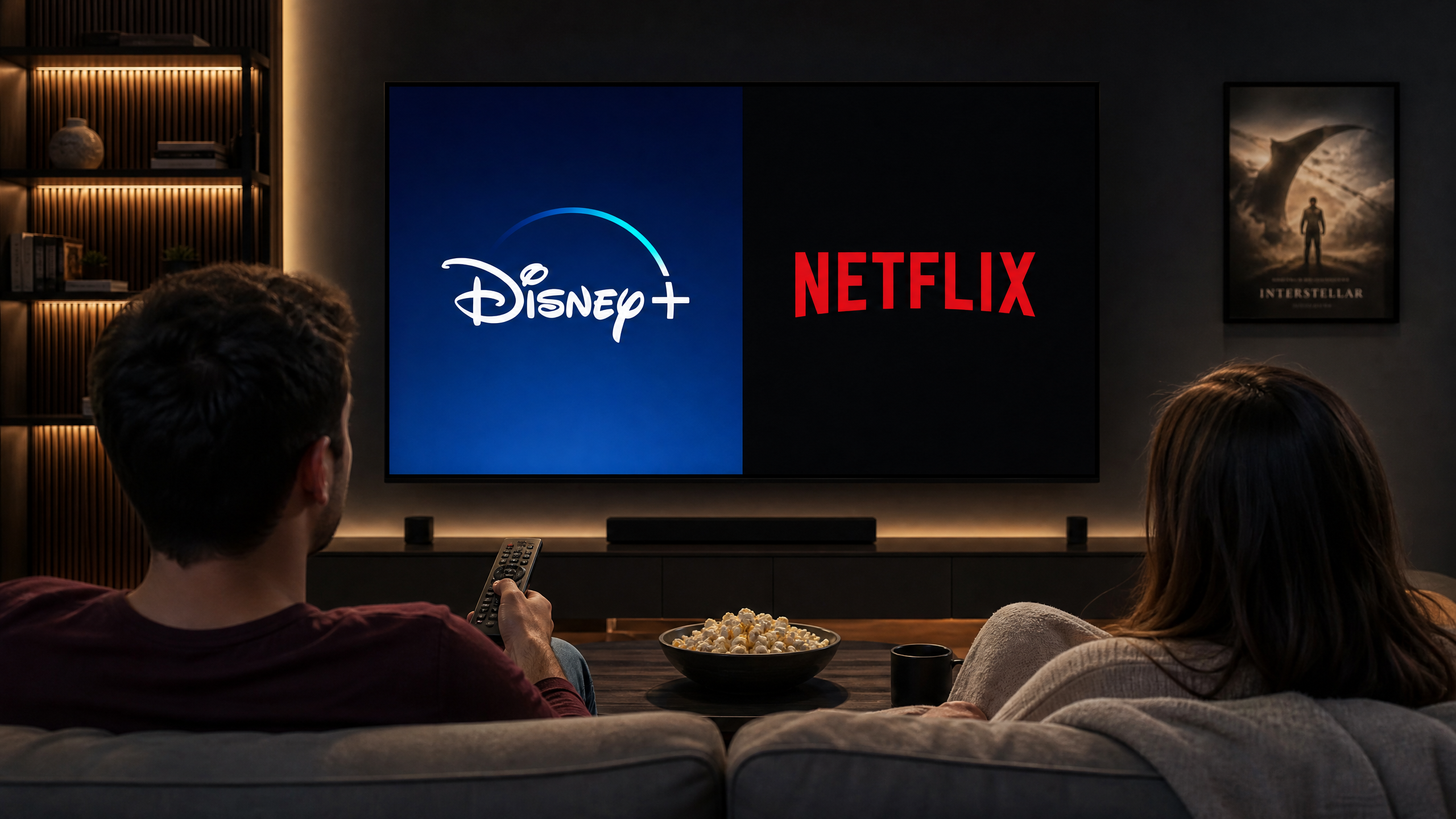
In a scenario that would rewrite the rules of the streaming era, Disney+ and Netflix have announced a surprise co-production deal for a new science-fiction franchise. Framed here as a hypothetical but plausible development, the imagined collaboration signals how far streaming platforms might go to secure global audiences, share escalating production costs and compete with deep-pocketed rivals.

The fictional announcement — characterized in this piece as a creative thought experiment — depicts the two companies committing to a multi-season television slate and a theatrical-first sci-fi film series conceived as a shared universe. Sources in this imagined scenario describe the project as an ambitious hybrid: big-budget, effects-driven storytelling built for both subscription and box-office potential.

Why a partnership between titans would matter

In this speculative account, the strategic logic is straightforward. Both Disney+ and Netflix face rising content costs, franchise fatigue among viewers and intensifying competition from legacy studios and boutique streamers. A joint venture allows them to split production risk, pool creative talent and exploit each platform’s strengths: Netflix’s global distribution muscle and data-intensive content strategy paired with Disney’s franchise expertise and theatrical infrastructure.

Analysts in this imagined narrative suggest the alliance would mark a turning point — from platform-first competition to selective cooperation where mutually beneficial IP increments are shared. For consumers, the hypothetical payoff could be more cohesive, high-quality science-fiction that leverages the best of both companies’ production capabilities.

Creative and commercial contours (as imagined)

The co-produced franchise in this scenario is described as a layered space opera that spans multiple eras and mediums. Initial plans include a flagship theatrical film intended to launch the cinematic timeline, followed by interconnected limited series and stand-alone anthologies designed for streaming. Reported budget ranges in this fictional context are rivalrous with top-tier studio tentpoles, supporting cutting-edge visual effects and marquee casting.

From a creative standpoint, the hypothetical project would aim to be franchise-friendly yet auteur-driven — recruiting celebrated showrunners and high-profile directors while maintaining a serialized backbone fans can follow across formats. As part of this narrative, licensing agreements are imagined to allow each platform exclusive windows: one platform securing early streaming rights and the other gaining theatrical or merchandizing advantages.

Industry reaction and implications (speculative)

In this creative scenario, industry watchers predict a mixed reception. Proponents say the collaboration could set a template for future cross-platform co-productions, enabling studios to shoulder risk while expanding creative possibilities. Critics, meanwhile, raise concerns about brand dilution, complex revenue-sharing arrangements and potential antitrust scrutiny if collaborative deals become too dominant.

The imagined deal would also test traditional marketing playbooks. Coordinating release windows, promotional tie-ins and subscriber acquisition strategies across two global platforms would require unprecedented alignment — a logistical and diplomatic feat in this fictional account.

What this means for subscribers and creators

Under the hypothetical terms painted here, viewers could benefit from higher production values and more interconnected storytelling, though access patterns might grow more complicated. Creators could gain larger budgets and broader audiences but may have to navigate more stakeholders and layered creative approvals.

Looking ahead: is co-production the new normal?

While purely imaginative, this scenario underscores a real industry truth: streaming companies are experimenting with every lever to keep and grow audiences. Joint ventures, licensing partnerships and shared franchises are increasingly plausible tools in an environment where subscriber growth slows and content spend remains high.

If a real-world Disney+–Netflix co-production ever materialized, it would not only be a headline-making cultural moment but also a test case for how rival platforms can collaborate without surrendering their competitive identities. For now, this piece offers a uniquely speculative lens on what the future of streaming alliances might look like — bold, complex and designed to capture viewers across screens and services.

Note: This article presents a fictionalized, speculative scenario intended to explore strategic possibilities in the entertainment industry. It does not report an actual announcement by Disney+, Netflix, or any affiliated entity.

Streaming War Escalates: Disney+ and Netflix Announce Surprise Co-Production Deal for New Sci‑Fi Franchise

# Streaming War Escalates: Disney+ and Netflix Announce Surprise Co-Production Deal for New Sci‑Fi Franchise

**By Staff Writer — Entertainment**

In a scenario that would rewrite the rules of the streaming era, Disney+ and Netflix have announced a surprise co-production deal for a new science-fiction franchise. Framed here as a hypothetical but plausible development, the imagined collaboration signals how far streaming platforms might go to secure global audiences, share escalating production costs and compete with deep-pocketed rivals.

The fictional announcement — characterized in this piece as a creative thought experiment — depicts the two companies committing to a multi-season television slate and a theatrical-first sci-fi film series conceived as a shared universe. Sources in this imagined scenario describe the project as an ambitious hybrid: big-budget, effects-driven storytelling built for both subscription and box-office potential.

Why a partnership between titans would matter

In this speculative account, the strategic logic is straightforward. Both Disney+ and Netflix face rising content costs, franchise fatigue among viewers and intensifying competition from legacy studios and boutique streamers. A joint venture allows them to split production risk, pool creative talent and exploit each platform’s strengths: Netflix’s global distribution muscle and data-intensive content strategy paired with Disney’s franchise expertise and theatrical infrastructure.

Analysts in this imagined narrative suggest the alliance would mark a turning point — from platform-first competition to selective cooperation where mutually beneficial IP increments are shared. For consumers, the hypothetical payoff could be more cohesive, high-quality science-fiction that leverages the best of both companies’ production capabilities.

Creative and commercial contours (as imagined)

The co-produced franchise in this scenario is described as a layered space opera that spans multiple eras and mediums. Initial plans include a flagship theatrical film intended to launch the cinematic timeline, followed by interconnected limited series and stand-alone anthologies designed for streaming. Reported budget ranges in this fictional context are rivalrous with top-tier studio tentpoles, supporting cutting-edge visual effects and marquee casting.

From a creative standpoint, the hypothetical project would aim to be franchise-friendly yet auteur-driven — recruiting celebrated showrunners and high-profile directors while maintaining a serialized backbone fans can follow across formats. As part of this narrative, licensing agreements are imagined to allow each platform exclusive windows: one platform securing early streaming rights and the other gaining theatrical or merchandizing advantages.

Industry reaction and implications (speculative)

In this creative scenario, industry watchers predict a mixed reception. Proponents say the collaboration could set a template for future cross-platform co-productions, enabling studios to shoulder risk while expanding creative possibilities. Critics, meanwhile, raise concerns about brand dilution, complex revenue-sharing arrangements and potential antitrust scrutiny if collaborative deals become too dominant.

The imagined deal would also test traditional marketing playbooks. Coordinating release windows, promotional tie-ins and subscriber acquisition strategies across two global platforms would require unprecedented alignment — a logistical and diplomatic feat in this fictional account.

What this means for subscribers and creators

Under the hypothetical terms painted here, viewers could benefit from higher production values and more interconnected storytelling, though access patterns might grow more complicated. Creators could gain larger budgets and broader audiences but may have to navigate more stakeholders and layered creative approvals.

Looking ahead: is co-production the new normal?

While purely imaginative, this scenario underscores a real industry truth: streaming companies are experimenting with every lever to keep and grow audiences. Joint ventures, licensing partnerships and shared franchises are increasingly plausible tools in an environment where subscriber growth slows and content spend remains high.

If a real-world Disney+–Netflix co-production ever materialized, it would not only be a headline-making cultural moment but also a test case for how rival platforms can collaborate without surrendering their competitive identities. For now, this piece offers a uniquely speculative lens on what the future of streaming alliances might look like — bold, complex and designed to capture viewers across screens and services.

Note: This article presents a fictionalized, speculative scenario intended to explore strategic possibilities in the entertainment industry. It does not report an actual announcement by Disney+, Netflix, or any affiliated entity.