Saba Budaya Baduy: A Journey into the Heart of Banten’s Indigenous Culture
Nestled in the karst-covered highlands of Lebak Regency, the Kanekes or Baduy community offers visitors a rare window into an enduring indigenous way of life. Known locally as Saba Budaya Baduy, a cultural pilgrimage here is not just sightseeing — it is an invitation to step gently into living tradition, where customary law, community cohesion and environmental stewardship remain central to daily life.
The Baduy live in secluded hamlets in the Kendeng mountains, broadly divided into Baduy Dalam (Inner Baduy) and Baduy Luar (Outer Baduy). Their lifestyle is famously simple and ritualized: the Inner Baduy, in particular, adhere strictly to ancestral rules that limit the use of modern technology and emphasize spiritual and material modesty. Clothing, agricultural practice and social behavior are all expressions of adat (customary law) that have shaped the landscape for generations. Visitors who respect those boundaries will find an atmosphere of calm and continuity that contrasts sharply with the modern world.
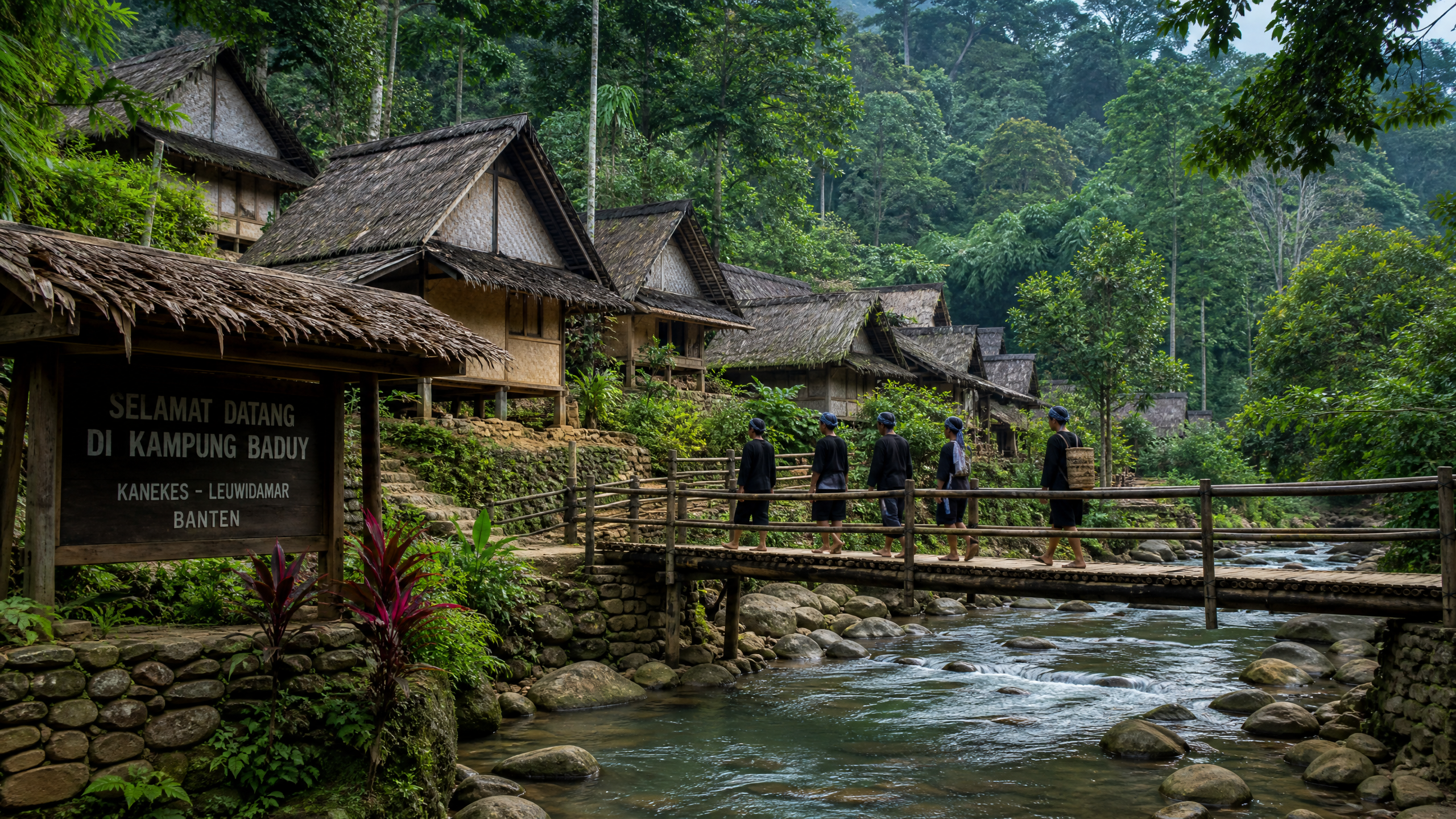
Beyond cultural richness, the Baduy territory is scenically compelling. Narrow footpaths wind through forest patches, small rivers and terraces of communal gardens. The community’s small-scale agriculture — primarily rice paddies, tuber plots and vegetable beds — is integrated with the surrounding forest, creating a mosaic of green that supports both people and biodiversity. Many travelers describe the feeling as restorative: fresh mountain air, the soft rhythm of daily chores, and the quiet of a landscape governed by customary conservation.
Sustainable tourism has become central to preserving these qualities. Access is regulated and mediated through local guides and village authorities so that the Baduy can control the number of visitors and the areas open to outsiders. This helps protect sacred sites and the Inner Baduy’s choice to remain free from electricity and modern conveniences. Tourism that respects local rules can deliver direct economic benefits: modest fees, homestays, and sales of woven handicrafts provide income that strengthens the community without forcing cultural change.
For visitors, the Baduy experience is unique and intimate. Walks led by knowledgeable local guides reveal traditional weaving techniques, the significance of specific plants, and the rationale behind customary prohibitions on hunting, logging and mechanized farming. Homestays or simple guesthouses in Outer Baduy villages offer the chance to taste home-cooked meals made from garden produce and to learn about daily routines that have persisted for centuries. Photography and other forms of documentation are generally permitted only with consent and always under the guidance of hosts — a reminder that this is someone’s home, not a museum.
Local leaders and tourism workers in Lebak emphasize that respectful behavior is the keystone of a successful visit. Practical guidelines include registering through official village channels, wearing modest clothing, refraining from loud behavior, asking permission before taking photos, and following the lead of local guides. These simple acts of respect help ensure that cultural continuity and the environment remain intact for future generations.
Saba Budaya Baduy is more than an attraction; it is a living classroom about resilience, communal values and sustainable living. For residents of Banten and visitors from farther afield, a mindful trip to the Baduy offers not only memorable landscapes and cultural encounters but also an opportunity to reflect on how modern life and traditional wisdom can coexist. As Lebak develops its tourism offerings, the challenge will be to maintain this balance — protecting the Baduy way of life while sharing its lessons responsibly with the world.