# Underdog Nation: The Small Country Shaking Up International Football
By The Banten Post Sports Desk
In a seaside stadium where fishing boats still outnumber buses, a dozen teenagers who once trained barefoot are now the reason larger federations have begun to look nervously at the calendar. The Lesser Republic of Vespera — population roughly 372,000, GDP smaller than many midtable club budgets — has rewritten expectations in international football with a blend of tactical clarity, institutional planning and an unmistakable belief.
From the first whistle to the last, Vespera’s rise has been defined as much by its micro-decisions as its headline results. On 5 June 2026, at Marina Stadium in Port Harlen (capacity 8,340; attendance 7,912), Vespera produced the kind of 2–1 upset that will be replayed in scouting rooms for seasons: a victory over the favored nation of Belmor in an international qualifier that pundits expected to be a routine away day for the visitors.
The scoreline — Levi Rojas 21′, Belmor 41′ (equaliser), Kaito Morena 78′ (free kick) — tells only part of the story. Possession figures (Vespera 38% to Belmor 62%) look reassuring to those who prize control, but the telling statistics were elsewhere: passes into the final third (Vespera 14), shots on target (Vespera 4, Belmor 3), and, crucially, expected goals (xG 0.95 Vespera; 1.12 Belmor). What Vespera lacked in volume it more than made up for in decisive moments.
Coach Marco D’Alessio, the program’s architect since 2021, described the philosophy succinctly after the match: “We do not try to be something we are not. We are compact, we punish mistakes and we train to win the 70 seconds that decide a game.” His words sounded less like a cliché and more like a mission statement: the team practices two distinct transitional patterns until they are fluent — a high-intensity counter-press to recover the ball in midfield, and a set-play routine executed with almost mechanical precision.
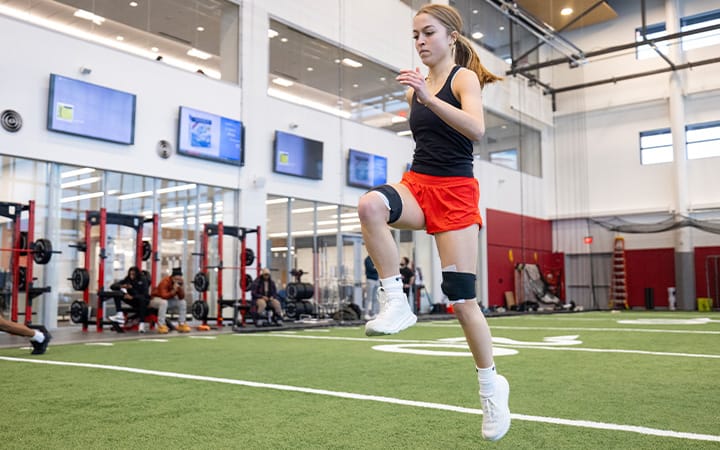
The narrative of Vespera’s ascent begins long before D’Alessio’s arrival, however. The national federation (VFA) invested in the Cerulean Training Complex in 2018, a modest facility compared with European academies but notable for its emphasis on sports science. The complex houses one full-size artificial pitch, two natural-grass strips, an altitude simulation room and a low-cost analytics room where volunteers, interns and a single full-time analyst named Mara Ikeda collate GPS and heat-map data.
The real multiplier effect has been the Harbor Lights Academy, an inter-island youth project launched in 2016. It recruits boys and girls aged 10–14 from fishing villages and urban neighborhoods alike, offering schooling, meals and football in exchange for a three-year commitment. Several of Vespera’s current internationals — most prominently captain Levi Rojas and winger Kaito Morena — came through Harbor Lights. Rojas, 27, famously commuted two hours each way by ferry for training as a teenager; this personal history is now recycled in federation fundraising appeals.
Tactically, Vespera is pragmatic. There is no single star system; instead, a small nucleus of players who understand their roles — two disciplined central defenders, an industrious defensive midfielder, and two creative wide players — executes set pieces and counters with the kind of rehearsed choreography normally seen at professional club level. Scouting has also been smart: the VFA hires retired players from neighboring countries as short-term consultants to identify undervalued dual-nationality prospects who might be eligible for Vespera’s passport program.
Off the field, stability has mattered. Sonia Kwan, VFA president since 2019, has balanced the federation books and attracted modest but consistent sponsorships from regional shipping firms and a domestic telecom company. That steady income paid for the Cerulean Complex and ensured that coaching staff received reliable salaries — the kind of mundane detail that often separates flickering success from sustained competitiveness.
Yet Vespera’s journey is not without fragility. The player pool remains small; injuries to key figures expose the thinness of domestic competition. International fixtures outside major windows can be logistically complex for players who still juggle semi-professional contracts at home. And the attention of richer federations may now lead to poaching, both of coaches and dual-nationality talent.
Still, the psychological imprint of Vespera’s recent results is real. Young players in Port Harlen now dream of wearing the national colours; attendance at domestic league matches has climbed 42% since 2022. Opposing teams no longer underestimate the islanders. Analysts in larger federations now calibrate their scouting reports differently: Vespera is no longer the team you can rotate through with a B squad.
Concluding summary
Vespera’s rise is a study in how small nations can alter the international landscape: targeted infrastructure investment, a coherent tactical identity, and youth development tied to social programs have combined to produce on-field results. The story is not one of miraculous talent discovery but of patient institution-building and tactical clarity. Whether Vespera can convert momentum into long-term competitiveness will depend on depth of talent, continued financial stability and an ability to protect its coaching pipeline from poaching. For now, however, this underdog nation has earned the right to be taken seriously, and football’s established order is waking up to a new, small but formidable contender.