# The Rise of ‘Ambient Computing’: How Devices Will Fade Into the Background
## Introduction
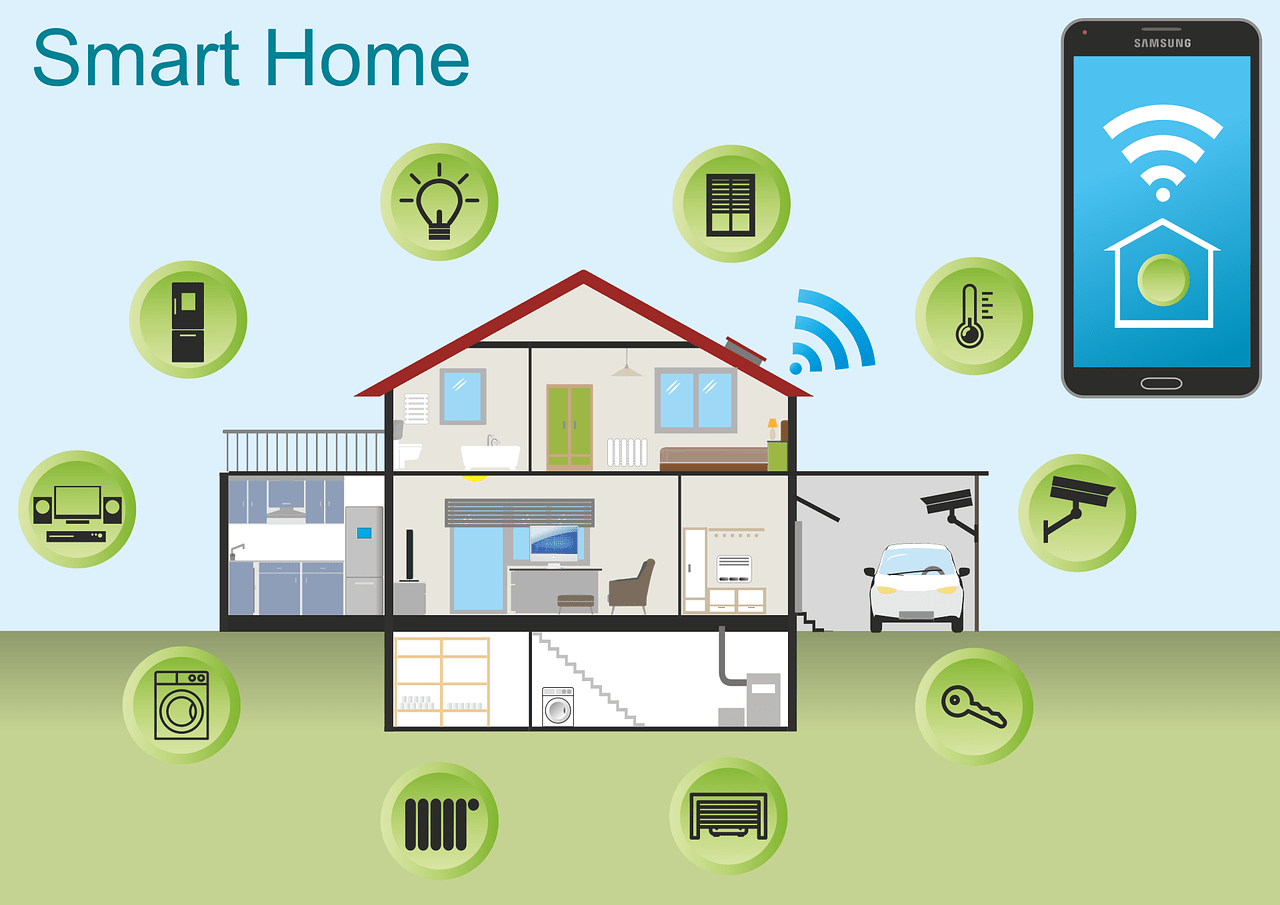
It starts before your first sip of coffee. Your smart kettle has already boiled because the kitchen motion sensor detected movement and the calendar on your refrigerator nudged an early meeting. The thermostat eased the morning chill without a swipe; lights in the hallway came on softly because the mesh network learned your route. Nothing announced itself with a chime or a notification demanding attention. This is ambient computing: a gradual handoff of agency from explicit device interaction to a subtle, context-aware background layer that anticipates needs and then steps aside.
Ambient computing is not a single gadget or app. It is a systems-level shift in how hardware, networks and software combine to make technology “disappear” into everyday life. The consequence is not just convenience but a redefinition of user experience, privacy design and infrastructure priorities across homes, offices and public spaces.
## A day made of invisible interactions
Consider a realistic 08:00–09:00 commute scenario to illustrate the idea: your phone, acting as a sensor hub, signals to your car that traffic on Route 7 is heavier than usual; the car suggests a different route and pre-warms based on an inferred preference. At a red light, the car’s cockpit detects that you’ve glanced at a calendar reminder and surfaces only the pertinent detail — no full-screen alert. On arriving, a building access beacon validates credentials locally (no cloud roundtrip) and the office lights adapt to preferred brightness using data from previous visits.
Specific components making this possible are already in play. Matter — the cross-industry smart-home standard backed by Amazon, Apple, Google and the Connectivity Standards Alliance — simplifies device interoperability. Thread and Zigbee provide low-power mesh networking; Bluetooth Low Energy handles proximity; Wi‑Fi 6/6E and private 5G supply low-latency backhaul when needed. On-device machine learning frameworks such as TensorFlow Lite and Core ML enable inference at the edge, while silicon vendors (Apple’s Neural Engine, Qualcomm’s Hexagon DSP, and various ARM Mali implementations) drive efficient local computation.
## Technology under the hood: local logic, global scale
Ambient computing thrives on three technical pivots:
– Local inference and edge compute: By shifting intelligence to devices and local gateways, systems reduce latency, preserve bandwidth and enable continued operation during network outages. For example, wake-word detection and certain vision-based occupancy models run entirely on-device in many modern smart speakers and cameras.
– Contextual sensing and sensor fusion: Combining proximity, motion, audio cues, calendar data and historical behavior produces more meaningful signals than any single sensor. That fusion is what allows systems to take action without explicit prompts.
– Interoperable infrastructure: Standards like Matter are unlocking cross-vendor ecosystems. A Matter-certified motion sensor from one manufacturer can trigger a light from another, lowering friction for users and simplifying setup.
These underpinnings make the technology feel invisible. Instead of launching apps, people experience flows: rooms that adapt, reminders that matter, devices that consent to be quiet.
## Real-world use cases beyond the smart home
Ambient computing extends into hospitals, warehouses, and urban infrastructure. In healthcare, passive monitoring systems can detect gait changes in seniors and trigger early fall prevention outreach. In logistics, RFID and low-power sensors let facilities orchestrate inventory movements with fewer handheld scanners. Smart city pilots have experimented with ambient sensors to optimize street lighting and manage air quality alerts without constant human supervision.
Large industrial users increasingly deploy edge AI appliances (for example, NVIDIA Jetson-class devices at the factory floor) to run defect detection models locally. The payoff is both operational resilience and reduced operational cost compared with streaming raw video to central servers.
## The trade-offs: privacy, security and design ethics
Where devices recede, expectations about privacy and control must rise. Ambient systems collect dense contextual data; even when processed locally, designs must be transparent and auditable. Technical mechanisms such as hardware-backed secure enclaves, federated learning, and differential privacy reduce exposure, but they are not panaceas. Likewise, interoperability introduces new attack surfaces: a compromised bridge could become a chain-link into other devices.
Designers also face a UX paradox: invisibility must not equal inscrutability. Users need clear affordances and escape hatches — ways to understand what a system is doing and to correct or opt out when necessary. Accessibility advocates warn that ambient systems should augment, not replace, explicit controls for users who rely on predictable interfaces.
## What companies and consumers should watch
– Adoption of Matter and Thread will accelerate basic compatibility in 2024–2026; look for more plug-and-play home setups.
– On-device AI optimizations and power-efficient inference will broaden what can run locally, especially in wearables and home hubs.
– Regulatory attention on data minimization and algorithmic transparency will increase; companies should build auditable logs and consent-first flows now.
## Conclusion — The quiet revolution
Ambient computing is less a silver-bullet product and more an operating principle for design and engineering: prioritize local intelligence, seamless interoperability and human-centered invisibility. The result will be a world where devices matter less by being more thoughtful — contexts adapt seamlessly, networks work unobtrusively, and users regain attention once spent managing screens.
As Mark Weiser argued decades ago with the idea of ubiquitous computing, the most profound technologies are those that vanish into the background. The coming years will test whether industry can deliver that promise responsibly — building systems that are both invisible in use and visible in governance. For readers and policymakers in Banten and beyond, ambient computing offers convenience and efficiency, but it also demands clearer rules and better design to ensure the background remains a place people trust.
## Summary
Ambient computing describes a shift toward devices and systems that anticipate and act without demanding explicit interaction. Enabled by edge AI, mesh networking, and standards like Matter, it promises more seamless experiences across homes, workplaces and cities. The benefits are real — lower latency, better resilience and less attention tax — but success depends on strong privacy safeguards, interoperable standards and transparent design. The technology will fade into the background only if we build it to be trustworthy, understandable and resilient.