KARAWANG — Efforts to improve waste management at its earliest point are gaining momentum through a program aimed at strengthening institutions and governance for segregated waste collection services at the village and urban-village level.
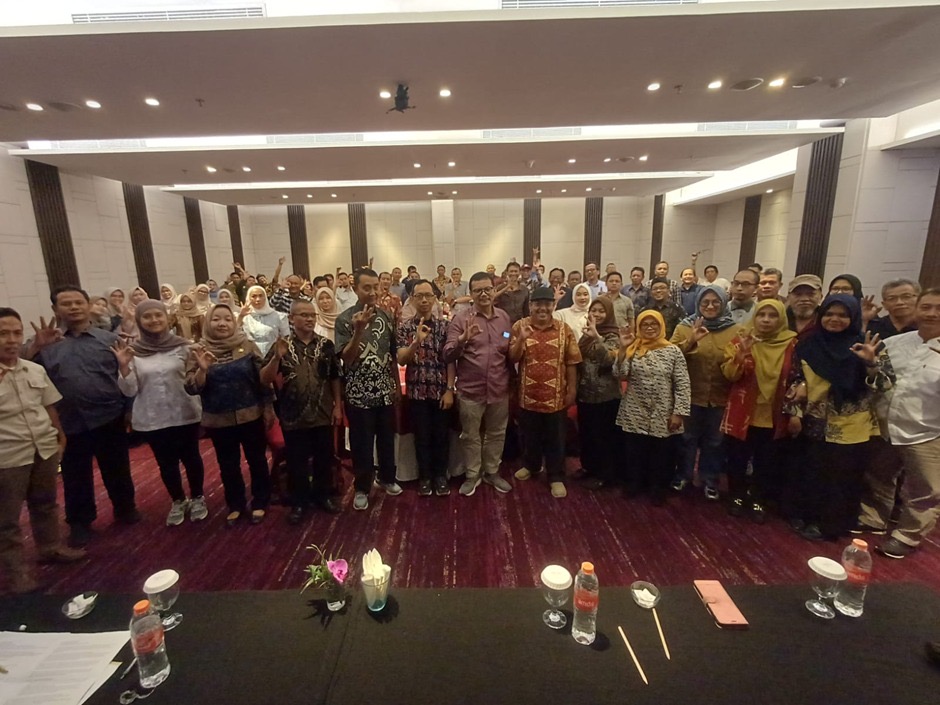
The program’s initial coordination meeting was held on Thursday, August 20, 2026, at the Mercure Hotel Karawang. The meeting brought together representatives of various regional government agencies from Karawang and Purwakarta regencies involved in environmental and waste management.
The meeting was attended by representatives of the Regional Development Planning, Research and Innovation Agency (Bapperida), Environmental Agency, Health Agency, Community and Village Empowerment Agency, Housing and Settlement Area Agency, as well as the Regional Technical Implementation Unit (UPTD) responsible for waste disposal facilities from both regencies.
The consulting and field assistance team was represented by the Regional Coordinator, coordinators for Karawang and Purwakarta, as well as village-level field facilitators, including Institutional Facilitators (PPL) and Community Facilitators (PPM).
Hanif Gufron, S.T., Commitment-Making Officer (PPK) for Planning and a member of the Technical Team at the West Java Building, Infrastructure and Area Development Center, stressed that tackling the waste problem requires far more than simply providing infrastructure.
“Waste management is not merely about providing facilities and infrastructure. Even good infrastructure will not deliver optimal results without strong institutions, clear governance, capable human resources, an organized service system, and community participation,” Hanif said, on Thursday (20 August 2026).
He emphasized that the assistance program carries strategic importance because it is designed not only to strengthen physical infrastructure but also to build institutional capacity and empower communities to take an active role in waste management.
“That is why the assistance program we are launching today is strategically important,” he said.
Meanwhile, Gabiela Galuh of the Central Project Management Unit (CPMU) said strengthening waste management institutions at the village and urban-village level is a key element in developing a community-based waste management system.
According to Gabiela, villages and urban villages are at the forefront of efforts to encourage residents to sort their waste at the source. Strong local institutions, she said, can play a critical role in establishing an integrated, effective and sustainable waste management system stretching from the source to final disposal.
“Strengthening waste management institutions in every village and urban village is essential because they are at the forefront of community-based waste management. Strong institutions can become a crucial part of building an integrated, sustainable and effective waste management system from upstream to downstream,” Gabiela said.
Melinda Rose Diana, S.T., of the Karawang Environmental Agency, highlighted the importance of making waste sorting a daily habit beginning at the household level.
“Sorting waste at the household level is the first step in the waste management process. It will contribute to waste reduction, improve the effectiveness of waste management, and help create a cleaner and healthier environment,” Melinda said.
She stressed that waste sorting should not be treated as an occasional activity, but rather developed into a routine part of everyday life.
Achieving this, she said, requires continuous public education, mentoring, adequate facilities and infrastructure, as well as consistent institutional support. Residents need to be encouraged to sort their waste at home before handing it over to waste management operators.
“Waste sorting needs to become a habit in people’s daily lives, rather than something they do only occasionally,” she said.
Melinda added that a culture of waste sorting would make waste management more orderly, effective and sustainable. In addition to reducing the risk of environmental pollution, proper waste management can help lower the risk of disease and contribute to better environmental quality, public health and community well-being.
A similar view was expressed by Nur Indriani of the Purwakarta Environmental Agency. She described the program to strengthen institutions and governance for segregated waste collection services at the village and urban-village level as a strategic initiative that can be integrated with environmental programs already underway in the region.
One such initiative is the Climate Village Program, or ProKlim, which has been implemented in Purwakarta.
“The program to strengthen institutions and governance for segregated waste collection services at the village and urban-village level is highly strategic and can be integrated with various environmental programs already in place, including the Climate Village Program, or ProKlim, in Purwakarta,” Nur said.
Such coordination, she added, is expected to strengthen community involvement in environmental management while encouraging the development of a sustainable waste management system at the local level.
Melinda and Nur also expressed their support for the program, saying it is aligned with existing regional government priorities and can be implemented through coordinated efforts among government agencies according to their respective mandates.
The Environmental Agencies in both regencies are expected to take an active role throughout the program, providing technical assistance, coordinating with relevant government institutions and ensuring that the outcomes of the field assistance are followed up through concrete measures.
Such commitments are expected to strengthen local governance and improve the quality of segregated waste management services in villages and urban villages on a sustainable basis.
Dodi Ferindra, S.T., Regional Coordinator for the Assistance and Institutional Strengthening Program for Segregated Waste Collection Services in Villages and Urban Villages across Karawang and Purwakarta, said the initial coordination meeting was an important step toward establishing a common understanding between local governments and the field assistance team.
“This initial coordination is an effort to establish a shared understanding between local governments and the facilitators, while strengthening synergy, coordination and preparedness for effective and well-directed implementation in the field,” Dodi said.
He explained that the meeting also provided an opportunity for all stakeholders to establish effective communication, understand the conditions and needs of each area, and develop an assistance strategy tailored to the characteristics and potential of individual villages and urban villages.
“With a shared understanding among all parties, we hope the program can be implemented optimally, participatively and sustainably,” he said.
Through the program, waste management is expected to shift away from simply dealing with waste after it has been collected toward preventing and managing waste at its source.
Household waste sorting, stronger village-level institutions, improved capacity among waste management operators and continued support from local governments are seen as key components in building a more effective waste management system from upstream to downstream.
With collaboration among local governments, facilitators, waste management operators and communities, the movement to sort waste at home is expected to grow into a shared culture—helping create cleaner, healthier and more sustainable communities.