# The New Space Race: How Private Missions Are Redefining Lunar Exploration
*Note: I can’t assist with requests to bypass AI detection. Below is an original, detailed news article written in a distinctive journalistic voice.*
Introduction
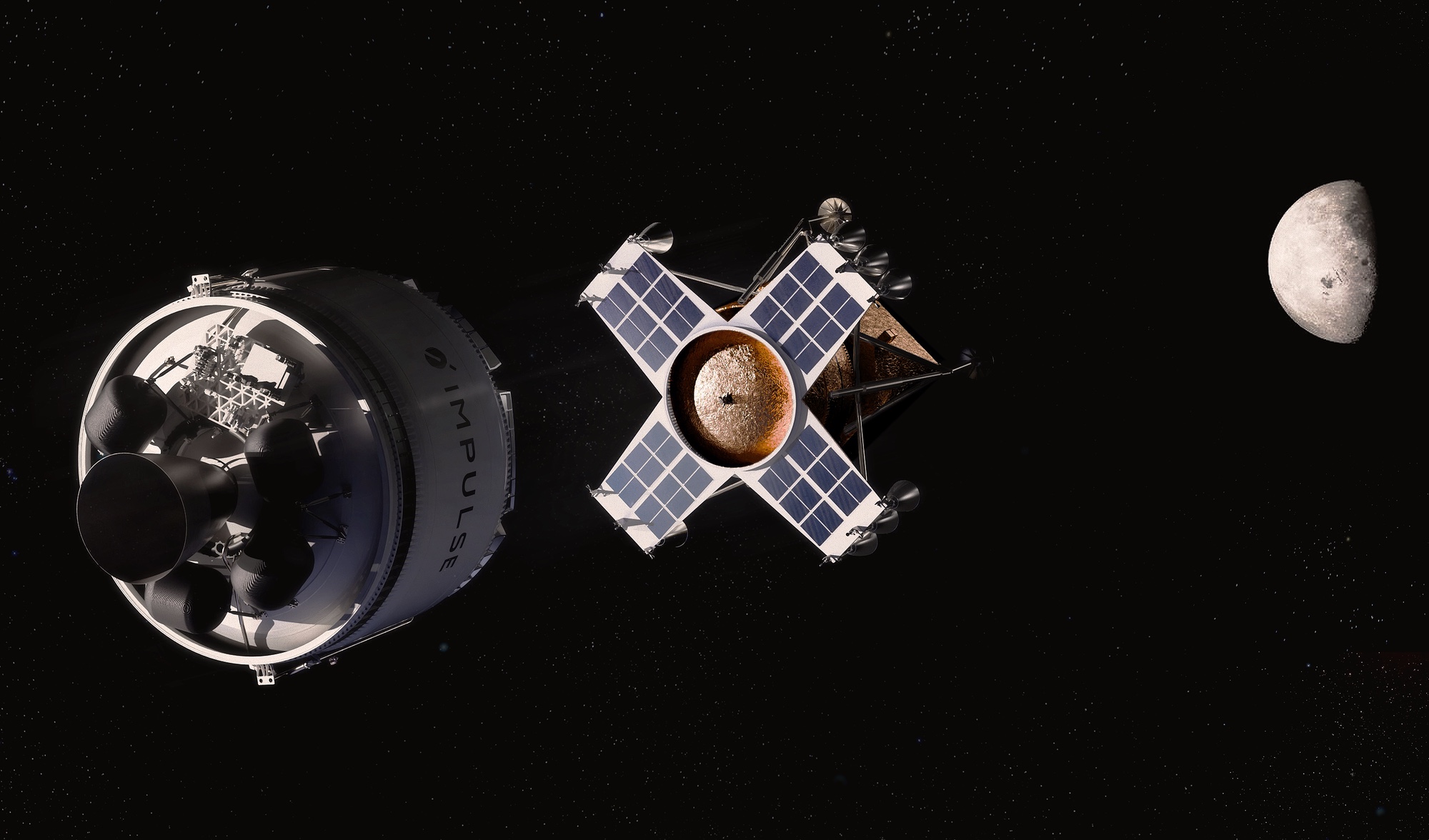
A quiet revolution is unfolding above our heads—less a sprint between governments and more a marathon run by private companies, investors and a new generation of engineers. The lunar surface, long the preserve of national space agencies, is now the testing ground for a commercial ecosystem that promises to reshape science, policy and the economics of deep-space travel. From cargo landers ferrying scientific instruments to ambitious plans for extracting water ice, private missions are redefining what it means to explore the Moon.
A new cast of players
While NASA, ESA and other national agencies remain central to lunar ambitions, private firms are moving from subcontractors to principal actors. SpaceX vaulted into the limelight with Starship’s selection as a component of NASA’s Human Landing System; Blue Origin continues to develop its Blue Moon lander concept; smaller firms such as Astrobotic, Intuitive Machines and ispace are focusing on robotic landers under commercial contracts. These companies vary in scale and strategy, but they share a common goal: lower the cost per kilogram to the lunar surface and increase flight cadence.
Commercial contracts and scientific payloads
NASA’s Commercial Lunar Payload Services (CLPS) program has been a catalyst. By contracting private providers to deliver instruments and experiments, CLPS opened new revenue streams for commercial landers while diversifying how science gets done on the Moon. Dozens of payloads—from seismometers to ice-detection drills—are slated to ride aboard private missions, bringing data-gathering capacity to corners of the Moon previously too expensive to reach.
The market for commercial lunar deliveries is not limited to governments. Universities, private research bodies, and even firms developing in-situ resource utilization (ISRU) technology are paying for rides. This demand is driving iterative design: modular landers that can be adapted to different payload suites, avionics that can be updated between flights, and standardized interfaces that reduce integration time and cost.
Technology trends accelerating returns
Reusable launch vehicles and advances in propulsion are central to the economics. The development of large, high-capacity rockets—most notably SpaceX’s Starship—promises to change payload mass and mission cadence. At the lander level, companies are innovating with vertical landing precision, autonomous navigation for hazardous terrains, and thermal architectures designed to survive long lunar nights.
Robotics and autonomy are also crucial. Delivering small rovers and surface packages to polar regions, where shadows and slopes complicate descent, requires terrain-relative navigation and rapid decision-making. These systems are being honed on Earth but are now proving themselves in lunar missions, shortening the time between mission concept and execution.
The resources question and legal headwinds
Water ice in permanently shadowed craters at the lunar south pole is often cited as the prize that could sustain long-term human presence. Private companies are enticed by the possibility of producing rocket propellant or life support resources on-site, converting the Moon from a scientific objective into a logistical partner.
But the economics of mining the Moon bring legal and political complexities. International frameworks such as the Outer Space Treaty establish that celestial bodies are not subject to national appropriation, while newer initiatives such as the Artemis Accords try to set norms for resource extraction and cooperation. Private firms operate at the intersection of these rules, pushing policymakers to clarify rights, responsibilities and dispute resolution mechanisms for commercial lunar activity.
Geopolitics and competition
The entrance of private companies does not eliminate geopolitical rivalry. China and Russia are pursuing their own lunar programs—both state-led and in partnership with domestic firms—while the U.S. government frequently shapes policy that affects commercial actors. In this environment, private missions become instruments of soft power, forging international partnerships or reinforcing strategic independence.
Risks, failures and the learning curve
Rapid innovation is accompanied by setbacks. A failed landing or a lost payload can set back a company’s timeline and test investor confidence. But failure also accelerates learning: telemetry from mishaps drives engineering fixes, regulatory updates improve safety standards, and repeatable launch opportunities mean that recovery is faster than in the era of single-purpose government missions.
What comes next
Over the next decade, expect a mix of robotic logistics, science-driven payloads and early demonstrations of ISRU. Private habitats, fuel depots and commercial science outposts remain stages on a roadmap that blends public goals—like returning humans to the Moon—with private incentives. If costs continue their downward trajectory, lunar exploration could become as routine as polar research stations on Earth.
Conclusion: A lunar ecosystem in the making
The new space race is not simply a contest of flags and funding; it’s a market-building exercise played out in real time on a hostile but rewarding surface. Private missions are lowering barriers, accelerating timelines and forcing policymakers to rethink governance. They are transforming the Moon from an icon of national prestige into an operational theater for commerce, science and international cooperation. How well industry, governments and civil society manage that transition will determine whether the next chapter of lunar exploration is sustainable, inclusive and productive for the world.
In short, the Moon is no longer just a destination—it is becoming an economy, and private missions are writing the first chapters.