Banten is the national stage for Indonesia’s 2026 Disaster Risk Reduction Month (Bulan Pengurangan Risiko Bencana, or PRB), held across the province from 13 to 15 October. The choice matters because Banten combines a long record of earthquakes and volcanic tsunamis around the Sunda Strait with recurring floods, landslides, windstorms and drought. It is a preparedness setting with a documented hazard history, not simply a ceremonial venue.
As of 14 October 2026, official sources confirm the host province and published programme, but not a final attendance figure or a post-event evaluation. That boundary matters: the schedule is evidence of what governments planned, while the lasting value of the national spotlight will depend on what is implemented after the banners come down.
Why is Banten hosting Disaster Risk Reduction Month in 2026?
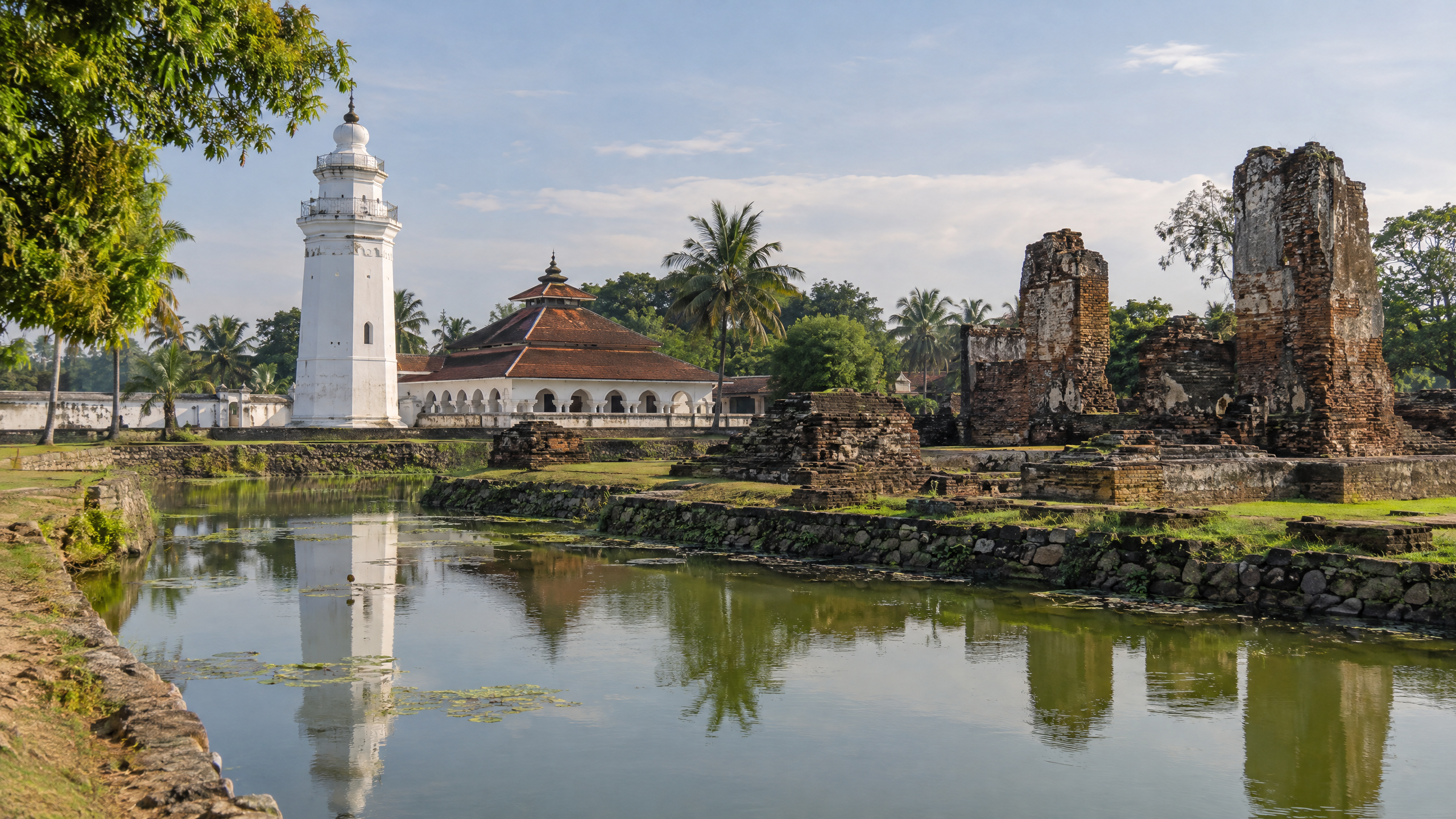
BNPB’s 2025 closing report records the handover of the Bulan PRB pataka from East Java to Banten, marking Banten as the 2026 host. The Banten provincial government then published a 13–15 October programme spread mainly across the Kawasan Pusat Pemerintahan Provinsi Banten in Serang, with a technology-failure seminar at Royale Krakatau Hotel in Cilegon and a cultural visit and tree-planting activity at Banten Lama.
The agenda moves beyond a single conference. It includes an MSME exhibition, a student disaster-education quiz, sharing sessions, a fun walk, a forum for BPBD operational chiefs with the BNPB chief, a peak event and environmental activities. Antara reported that the programme was intended to strengthen preparedness, mitigation and public awareness. The official schedule shows a national policy conversation being placed in schools, public spaces, government offices and a historic landscape.
What does Banten’s hazard history show?
Banten’s risk is layered. A BNPB historical study describes an old record of earthquakes and tsunamis, including a 416 CE eruption-and-tsunami account preserved in historical chronicles. The Badan Geologi’s Indonesia Tsunami Catalogue separately lists Krakatau-related tsunami events, including 416, 1883, 1928 and 1930. These records should be read as historical documentation, not as a forecast of when the next event will occur.
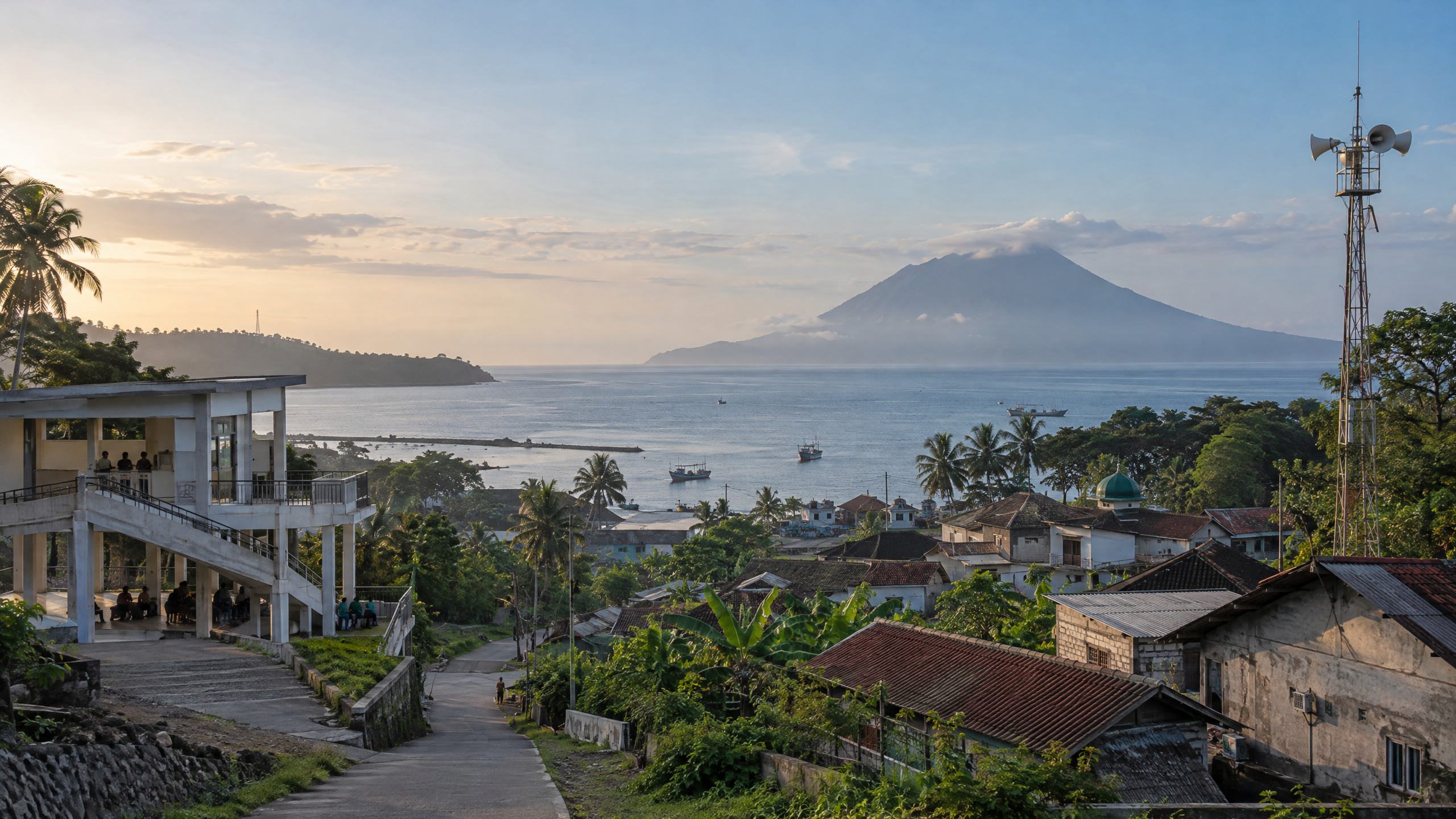
The 1883 Krakatau eruption remains central to the region’s hazard memory. The geological catalogue records tsunami evidence linked to the eruption, including coral blocks found near Anyer. In modern times, the lesson became immediate again on 22 December 2018, when an Anak Krakatau eruption triggered a slope collapse and a non-tectonic tsunami that struck Banten and Lampung. BMKG’s account says its earthquake-based tsunami warning system did not automatically process the volcanic signal. BNPB’s early report, issued while counting was still under way, recorded 40 deaths, 584 injuries and two missing people across affected areas; Pandeglang was the hardest-hit Banten district in that update.
How do today’s risks extend beyond tsunamis?
The provincial government says hydrometeorological disasters are the events most commonly experienced across Banten’s eight regencies and cities. Its BPBD has identified flash floods, landslides, whirlwinds and earthquakes among recurring threats, while drought preparedness has also become a focus. In Pandeglang, BMKG’s 2025 field-school report identified a multi-hazard setting shaped by the southern Java megathrust, active faults, the Sunda Strait seabed and Anak Krakatau. That combination explains why preparedness cannot be reduced to a single warning siren or a single type of map.
Which facts about the 2026 event are verified?
- Banten is the officially announced host of Bulan PRB 2026, with activities scheduled for 13–15 October.
- Serang is the main centre named in the provincial schedule; Cilegon hosts the seminar on technology failure.
- The programme includes education, public discussion, a BPBD leadership forum, environmental action and cultural activity.
- BNPB’s 2025 report documents the handover that designated Banten for 2026.
- Banten’s provincial disaster plan covers 2023–2027 under Governor Regulation No. 8 of 2024.
- BMKG and BNPB records verify the volcanic mechanism and early impacts of the 2018 Sunda Strait tsunami.
What does “disaster risk reduction” mean here?
Disaster risk reduction means lowering potential losses before a hazard becomes a disaster. In practice, that includes risk information, land-use and infrastructure decisions, early warnings, evacuation routes, drills, public education, ecosystem care and coordination among authorities and communities. The distinction is important in Banten: a hazard such as an earthquake or tsunami cannot be switched off, but exposure, vulnerability and response capacity can be changed.
What do we know about Banten’s national role?
The 2026 programme turns Banten’s experience into a public classroom. A student quiz addresses knowledge; the BPBD forum addresses coordination; the technology-failure seminar broadens the agenda beyond natural hazards; and the Pandeglang preparedness work shows how warnings, equipment and community training can be connected. The provincial government also links PRB to development, arguing that safer communities support public welfare and economic activity.
What remains unclear after 14 October 2026?
The official pages reviewed do not yet establish final attendance, a completed list of commitments, measurable changes to evacuation capacity, or a post-event assessment. They also do not say that Banten was selected solely because of its hazard history; BNPB’s handover report confirms the selection, while the provincial and Antara reports explain the intended preparedness value. The strongest conclusion available now is narrower and more defensible: Banten’s hosting role places a nationally coordinated DRR agenda in a province where historical evidence and recent disasters make risk reduction a continuing public necessity.
Sources
- https://bantenprov.go.id/berita/provinsi-banten-jadi-tuan-rumah-bulan-pengurangan-risiko-bencana-2026
- https://bulanprb.bnpb.go.id/
- https://bnpb.go.id/berita/gaung-puncak-peringatan-bulan-prb-2025-menggema-di-trowulan-bendera-pataka-diboyong-ke-ujung-barat-pulau-jawa
- https://banten.antaranews.com/berita/392604/provinsi-banten-jadi-tuan-rumah-bulan-pengurangan-risiko-bencana-2026
- https://bantenprov.go.id/video/banten-siapkan-rencana-penanggulangan-bencana-sampai-2027-fokus-banten
- https://bantenprov.go.id/index.php/berita/waspada-bencana-kekeringan-pemprov-banten-lakukan-antisipasi
- https://sejarah.dibi.bnpb.go.id/artikel/banten-tangguh-bencana-dengan-kearifan-lokal-gempa-bumi-dan-tsunami-di-banten-dalam-kajian-historis/176
- https://geologi.esdm.go.id/storage/publikasi/y2QHnxMUXRyvP9jRpz3x0lSboEZA2czHyFdPBUgt.pdf
- https://www.bmkg.go.id/berita/utama/bmkg-ungkap-kronologi-tsunami-selat-sunda
- https://bnpb.go.id/berita/update-dampak-tsunami-selat-sunda-43-meninggal-dunia-584-orang-luka-luka-dan-2-orang-hilang
- https://www.bmkg.go.id/berita/utama/sinergi-bmkg-dan-pemkab-pandeglang-warga-pesisir-sumur-dibekali-kesiapsiagaan-hadapi-gempabumi-dan-tsunami