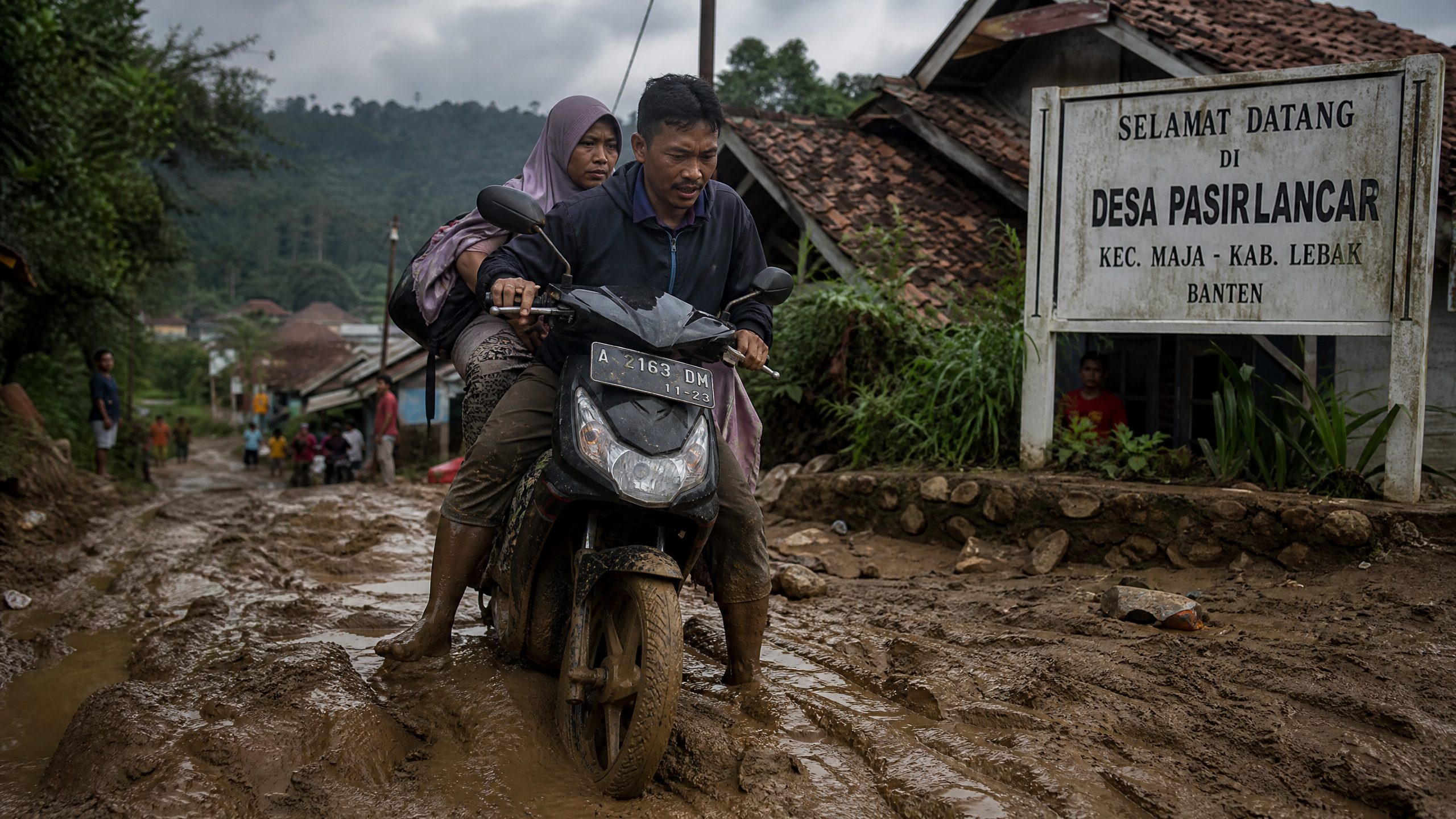
Desa Pasirlancar Viral: Motorcycles, Mud and a Community Pushing Back Against Decades of Neglect
A short video that went viral over the weekend has put the remote Desa Pasirlancar in Banten back in the spotlight — not for a festival or natural beauty, but for the harsh reality of daily life on roads that barely qualify as paths. The footage, widely shared on social media, shows residents navigating steep, muddy tracks on motorcycles, carrying everything from produce to children, and highlights long-standing infrastructure deficits that leave the village isolated during the rainy season.
The six- to eight-second clip, filmed by a local resident, shows riders picking their way along deeply rutted trails and makeshift wooden planks, sometimes dismounting to help push heavy loads. Viewers across the province reacted with a mixture of shock, sympathy and calls for immediate government action. In the days following the video’s release, Pasirlancar has become the focus of conversations about rural access, equity and public investment in Banten.
Local residents say the scenes in the video are not exceptional but routine. For decades, villagers have relied on motorcycles — known locally as “motor” — to travel to markets, health facilities and schools because there is no proper road for cars or ambulances. During the dry season, the route is passable but still perilous; when the rains begin, erosion and mud turn essential trips into dangerous expeditions. Several parents report keeping children at home during heavy rains because the journey to the nearest school becomes too risky.
“This is our only way to go to the market and to take sick relatives to clinics,” said a resident who asked not to be named. “We stitch the route together with wood and stones, but every year it gets worse. When someone has an emergency at night, we pray that help arrives in time.”
The lack of reliable infrastructure has economic consequences as well. Farmers struggle to bring crops to market, increasing post-harvest losses and reducing income. Small traders face higher transport costs and longer travel times. Villagers also point out that tourism potential in parts of Banten is curtailed when remote communities are inaccessible, limiting broader development opportunities.
Community-led coping strategies are evident: neighbors take turns repairing the track, and makeshift bamboo bridges are common across gullies. But these are stopgap measures. Local leaders and residents say they need durable investment — proper grading, graveling or paving and drainage systems that can resist heavy rains. Without such measures, emergency access for ambulances and fire services will remain precarious.
The viral video has prompted responses from netizens and civil society groups, some of whom are demanding that district and provincial authorities perform an urgent assessment of Pasirlancar’s road conditions. Community advocates emphasize that visible short-term fixes should be paired with longer-term planning to address landslide risk and watershed management in the area.
Calls for official comment were directed to regional offices, but as of publication, there has been no detailed public statement outlining specific plans or timelines for intervention. Infrastructure projects in remote villages often face hurdles: competing budget priorities, challenging topography, and lengthy administrative procedures. Still, residents insist that past delays have come at a human cost.
Local NGOs say this moment offers an opportunity. “The video has drawn attention, and attention means political space for immediate action,” a representative from a rural development organization told thebantenpost.com. “Authorities should conduct a rapid needs assessment, allocate emergency funds to open reliable access routes, and commit to a longer-term plan that includes community input.”
For villagers in Desa Pasirlancar, the hope is simple: that the national and provincial promise of improved rural connectivity becomes visible not just in glossy development plans, but in safe, usable roads that let children go to school, farmers reach markets, and anyone in need access medical help without risking their lives.
As the conversation continues online and offline, Pasirlancar’s video remains a stark reminder that infrastructure is more than concrete and asphalt — it is the lifeline that connects communities to opportunity and safety. The village and its supporters now wait to see whether viral attention will turn into concrete action.