Answer in brief: Roads and drainage keep returning to public attention in Banten because the October 2026 weather pattern is uneven: BMKG says dry conditions still dominate much of Indonesia, but local moderate rain, heavy rain, lightning and strong winds remain possible, including in Banten. When short, intense rain meets a blocked, undersized or unfinished outlet, water can collect on roads quickly. That is why drainage projects are newsworthy even before the province formally enters the core of the 2026/2027 rainy season.
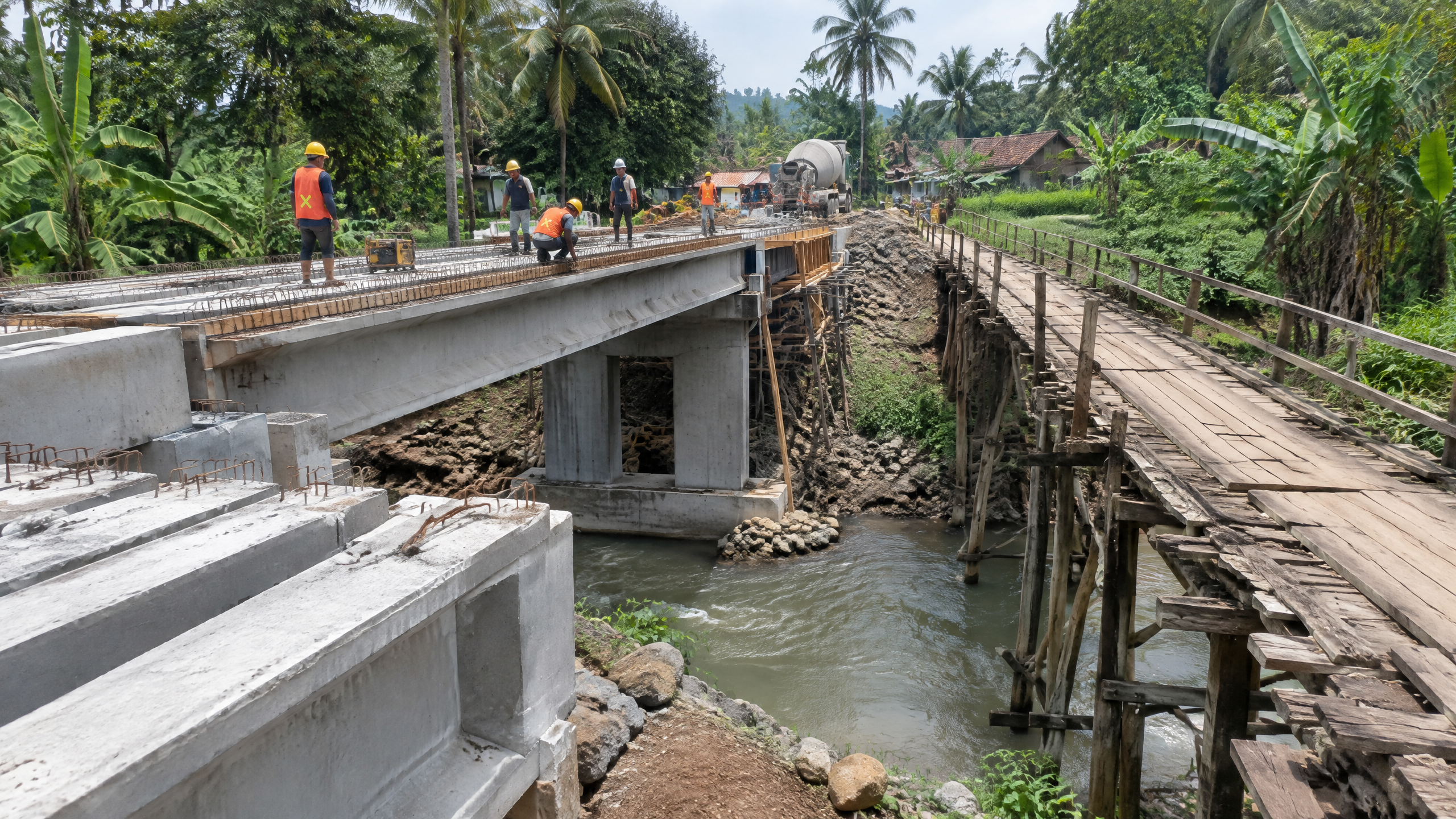
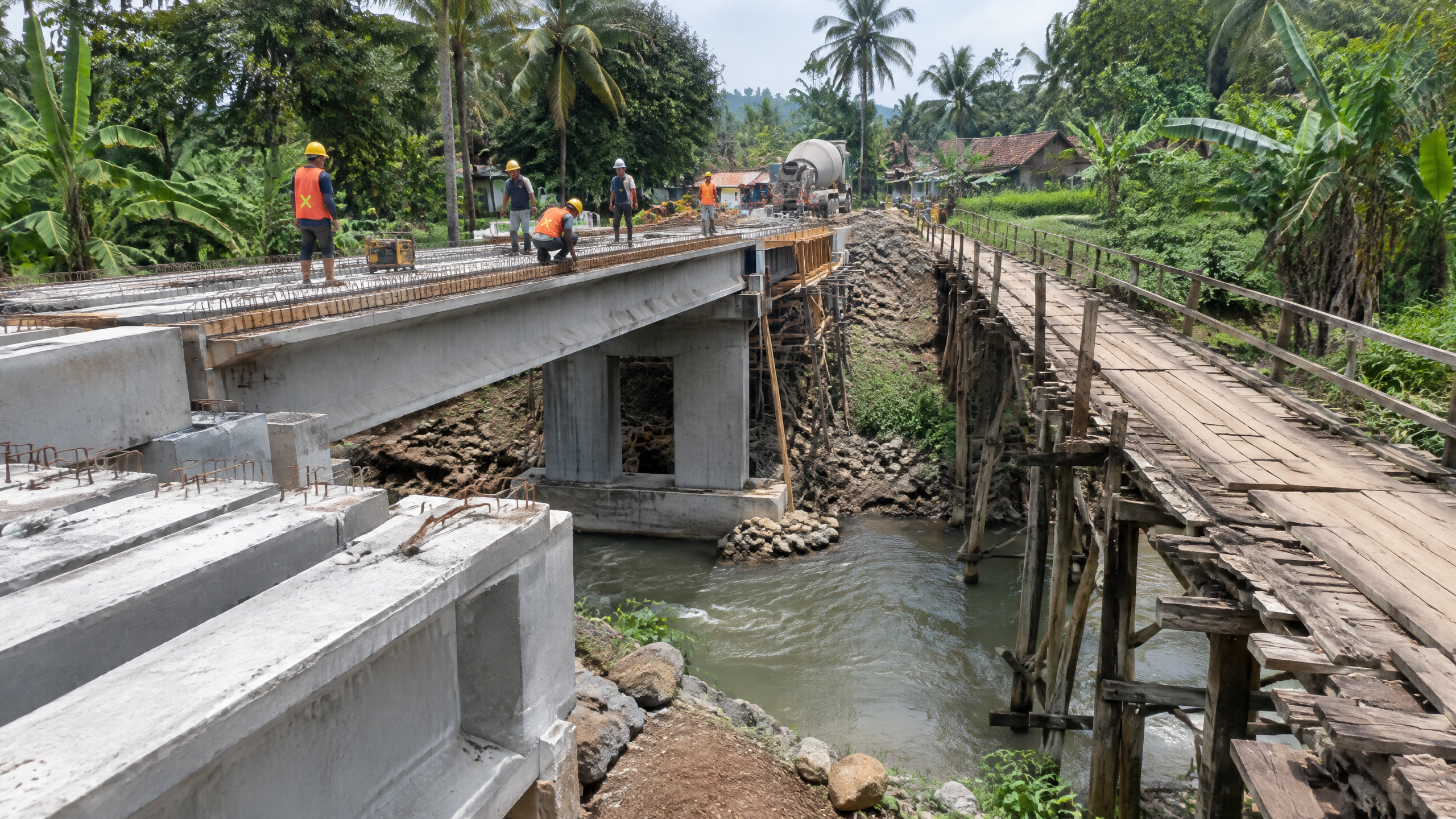
The clearest current example is Serang’s Kali Wadas area. A joint provincial-city project that began in July 2026 is building two drainage segments totalling about 1,650 metres, including a crossing beneath a railway line. The project is intended to move water away from a location described by the city government as having experienced serious flooding, while administrative approval for the railway crossing remained a live issue in the latest official account.
Why can roads flood when the season is still mostly dry?
“Rainy-season transition” does not mean every day is wet across the province. In its October 8 update for the period of October 9–15, BMKG reported that dry conditions remained dominant nationally. It also said regional and local atmospheric dynamics could still produce moderate-to-heavy rain, lightning and strong winds. For October 9–11, Banten was listed among areas where moderate rain could increase and among areas at risk of strong winds. For October 12–15, Banten remained on the strong-wind watch list.
That combination matters for roads. A long dry spell can be followed by a concentrated downpour in one district or city, rather than a uniform rain event across Banten. Roadside drains, culverts and outfalls then have to handle a sudden pulse of runoff. If water cannot cross a road or reach a river, the road becomes the visible place where the drainage failure is noticed. This is a general mechanism, not proof that any particular road was flooded by one specific cause.
What does the Kali Wadas project tell us?
The Serang city government says the Kali Wadas response was proposed because flooding had repeatedly affected the area. At an inspection on July 23, 2026, Mayor Budi Rustandi said construction had started and was targeted for completion during 2026. The first stage covers a 1,250-metre segment and a 400-metre segment. The planned flow path must pass beneath railway tracks, requiring permission from the relevant parties.
The same official release says the province is carrying out the work directly rather than through a local-government financial-assistance scheme. It also says the city plans to remove structures built over water channels when they obstruct normalization. That detail explains why drainage stories are also road and land-use stories: a channel can exist on a map but lose practical capacity when access is blocked or its crossing is not complete.
The project is not evidence that all of Banten has the same drainage problem. It is a documented example of a local bottleneck receiving a large, coordinated intervention. Its final performance, including how it works during a major rain event, cannot yet be judged from the July announcement alone.
Has Banten seen this road-drain link before?
Yes, official provincial reporting provides an earlier example in Lebak. In August 2023, the Banten government inspected drainage work on Jalan Raya Bayah–Cikotok after high rainfall had caused flooding near Bayah Barat. The provincial public works agency described the channel as an outlet for water from the road body and said the design included a crossing so water would have a clear discharge route. The reported construction used U-Ditch measuring 80 by 100 centimetres and was planned over 120 days from June to October 2023.
That historical case should be read as context, not as a current status report. It shows why road drainage becomes a recurring policy issue: keeping vehicles moving depends not only on pavement, but also on where water enters, crosses and leaves the road corridor.
What are the verified facts?
- BMKG’s October 8, 2026 forecast update says dry conditions still dominate much of Indonesia, while local moderate-to-heavy rain and strong winds remain possible.
- For October 9–11, Banten was included in BMKG’s areas for possible increased moderate rain and strong winds; for October 12–15, it remained listed for strong-wind potential.
- BMKG’s 2026/2027 seasonal outlook says most Indonesian areas are expected to enter the rainy season in November or December 2026, with the start later than normal in 61.08% of seasonal zones nationally. The published page reviewed here does not provide a Banten-specific start date.
- Serang’s Kali Wadas project has two initial drainage segments totalling about 1,650 metres and requires a railway crossing.
- The Banten government’s Bayah–Cikotok release documents a 2023 drainage response to earlier flooding near a road and public facilities.
What does “drainage” mean here?
Drainage is the network that collects and conveys rainwater away from a surface. On a road, that can include roadside channels, inlets, culverts, crossings and an outlet to a river or other receiving water. “Normalization” generally means restoring or improving a channel’s ability to carry water, but the word alone does not establish that a project has solved flooding permanently.
What we know and what remains unclear
What we know: Banten is experiencing a period in which the broader atmosphere can remain dry while local rain events still occur. Official projects in Serang and the earlier Bayah–Cikotok work show that governments are treating drainage, crossings and road runoff as connected infrastructure problems. The Kali Wadas project gives the public a measurable intervention to follow: 1,650 metres in its initial stage, with a railway crossing and a 2026 completion target stated by the city.
What remains unclear: The sources reviewed do not establish a province-wide count of October 2026 road inundations, a single rainfall threshold that explains each incident, or an independently verified completion and performance report for Kali Wadas as of October 14. They also do not show that every social-media post about a wet road represents a flood emergency. For that reason, the safest conclusion is narrower: roads and drainage trend because weather variability exposes infrastructure bottlenecks, while highly visible construction projects turn those bottlenecks into continuing public news.
Sources
- https://www.bmkg.go.id/cuaca/potensi-hujan-sepekan/prakiraan-cuaca-indonesia-sepekan-periode-09-15-oktober-2026-meski-kemarau-mendominasi-potensi-hujan-masih-ada-di-sejumlah-wilayah
- https://www.bmkg.go.id/iklim/prediksi-musim/prediksi-musim-hujan-2026-2027-di-indonesia
- https://serangkota.go.id/detailpost/pemprov-banten-mulai-bangun-drainase-kali-wadas-pemkot-serang-targetkan-penanganan-banjir-tuntas-tahun-ini
- https://bantenprov.go.id/index.php/berita/tinjau-pembangunan-drainase-bayah-cikotok-pj-gubernur-banten-al-muktabar-pastikan-pembangunan-optimal