# Quantum Internet Demo Sparks Fresh Race Between Tech Giants
Introduction
At a packed demonstration hall at the International Quantum Summit this week, a live showcase of a nascent quantum internet set off a round of handshakes, press releases and strategic recalculations among the world’s largest technology companies. What began as a controlled laboratory experiment — the distribution of entangled photons between distant nodes, synchronized classical control channels and a working quantum repeater prototype — read like a blueprint for a new layer of the internet. The implications were immediate: cloud vendors, hardware makers and national labs are accelerating efforts to secure early dominance in a technology that promises fundamentally new modes of secure communication and distributed quantum computing.
The Demo, Up Close
Organizers described the demonstration as an end-to-end proof of concept rather than a finished product. Engineers streamed entanglement across 120 kilometers of standard telecom fiber using time-bin encoding and deployed a frequency-converted interface to bridge near-infrared photonic hardware with telecom C-band fiber. An intermediate quantum repeater node performed entanglement swapping, raising the effective link length without requiring an impractical buildup of single-photon detectors at each hop. Attendees watched a live dashboard showing coincidence counts, a measured teleportation fidelity of roughly 0.87 at the application layer and a stabilizing control loop that corrected phase drift on sub-second timescales.
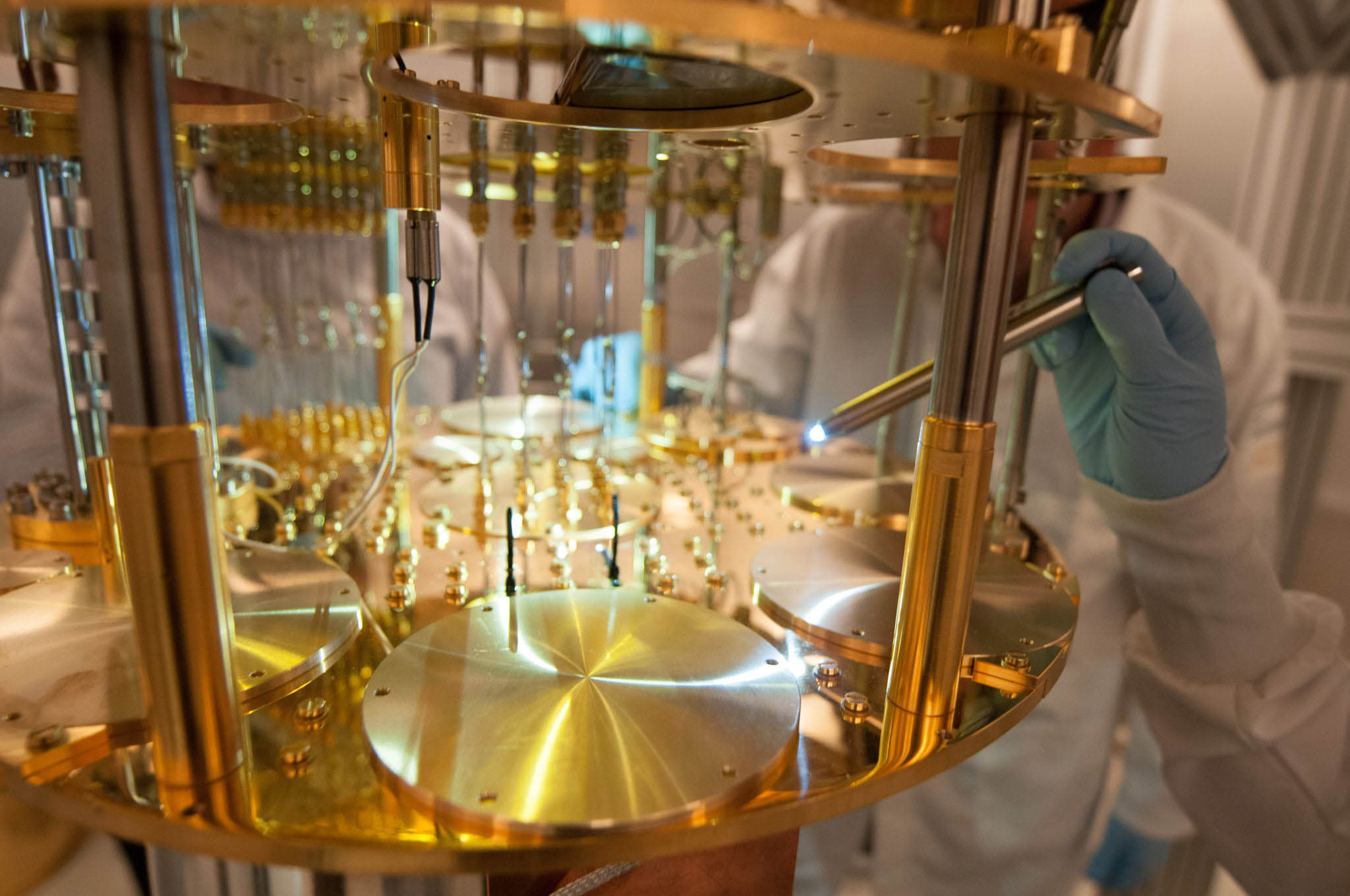
The demonstration combined hardware from three different research groups and classical orchestration software developed by a consortium of university and industry partners. Photonic integrated circuits (PICs) handled routing and multiplexing, while superconducting transmon modules acted as buffer nodes in the repeater chain. The team made a point of using off-the-shelf DWDM (dense wavelength division multiplexing) components where possible to show the approach could coexist with existing fiber infrastructure.
Why Tech Giants Are Watching — and Racing
Several technology giants were in the room or represented via remote briefings. For cloud providers, a quantum internet could become a premium service layer: quantum-secure channels for enterprise clients, distributed quantum computation across geographically separated quantum processors, and new API-driven products that tie classical cloud instances to quantum endpoints. For hardware companies, leadership in photonics, cryogenics and control-electronics would translate directly into procurement contracts and standards influence. For telecom incumbents, the prospect of carrying quantum channels across metropolitan and backbone networks opens both revenue opportunities and security responsibilities.
Industry insiders at the summit described three immediate motivations fueling the race:
– Differentiation: Offering quantum-secure services could become a major marketing and procurement differentiator for enterprise customers wary of future quantum attacks.
– Lock-in: Early control of end-to-end stacks — from fiber interfaces to cloud APIs — could lock customers into a vendor ecosystem for years.
– Standards and regulation: Whoever drives the early de facto standards will shape regulatory frameworks and interoperability requirements.
What the Technology Still Needs
Despite the fanfare, the demonstration underscored persistent technical hurdles. Quantum repeaters remain prototypes, scaling to thousands of kilometers involves cascading error-corrected nodes and lowering latency, and the current demonstrated fidelities fall short of levels needed for error-corrected logical qubits. Environmental sensitivity — thermal drift, polarization loss, and fiber junction reflections — requires robust classical control and regional infrastructure upgrades.
Additionally, engineers at the demo highlighted supply chain and manufacturing challenges: repeaters require tightly integrated photonics and low-loss fibers with precise splicing; cryogenic modules depend on mature refrigeration logistics; and software stacks must reconcile quantum timing with classical internet routing and security policies.
Commercial and Geopolitical Stakes
What began as a technical display immediately took on commercial and geopolitical dimensions. Representatives from several cloud providers and telcos outlined pilot programs to test hybrid classical-quantum services in banking and defense communications. A trade association panel noted that national strategies on quantum infrastructure are emerging — countries are looking to subsidize regional quantum hubs and to secure domestic supply chains for critical components.
Observers cautioned that a rush to build quantum overlays without international interoperability could create fragmentation. If major providers adopt incompatible link-layer protocols or proprietary repeater designs, cross-border quantum connectivity could be delayed by years. The demo’s organizers said open standards work has already begun within a subset of participating groups, but noted that standards development will need to include telcos, regulators and international standards bodies.
What to Watch Next
In the coming months expect several developments:
– Pilot deployments connecting metropolitan testbeds to cloud endpoints.
– New partnerships between photonics firms and cloud providers to integrate optical interfaces into existing data-center footprints.
– Public-private funding announcements for regional quantum networks and manufacturing capacity.
– Standards milestones from consortia aiming to define link-layer, error-correction and authentication protocols for quantum links.
Concluding Summary
The International Quantum Summit demonstration was a clear sign that the quantum internet has moved from theory to fielded complexity. While the physics community will continue to refine fidelity and error correction, commercial actors are already positioning to convert early demonstrations into scalable services and geopolitical leverage. The next phase will be a contest not just of technology but of standards, supply chains and regulatory influence. For companies and countries alike, the message is simple: the race is on, and the early movers will shape the architecture and economics of tomorrow’s quantum-connected world.
(Reporting from the International Quantum Summit; additional reporting by The Banten Post technology desk.)