SERANG — The central question for the Serang Regency Council as it examines tourism, coastal resilience and public-safety spending is not how many visitors the government can attract. It is whether the money budgeted for a busier coast can be traced to safer beaches, better warnings, faster rescue coordination and services that visitors can actually trust.
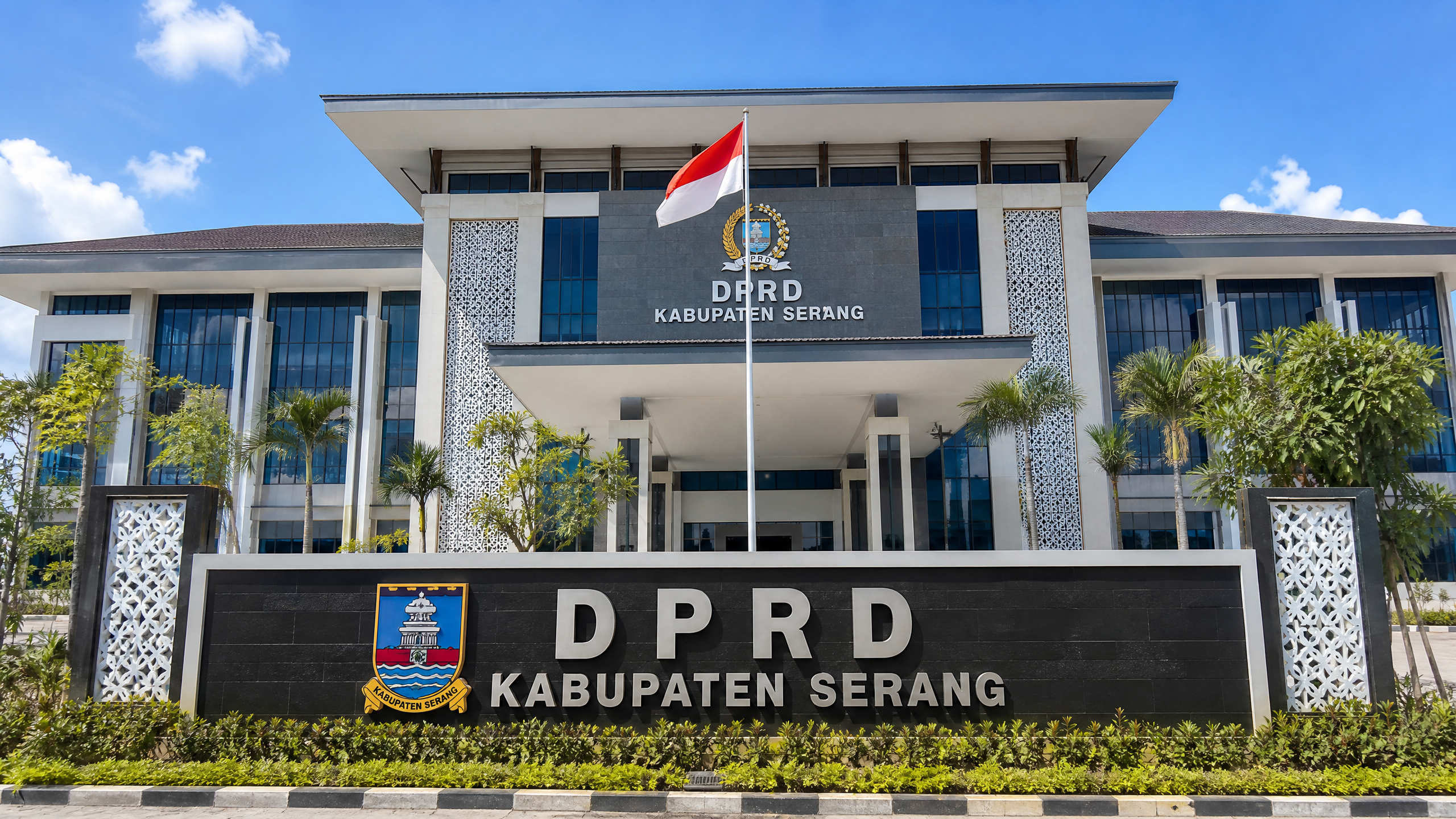
That question matters because the administration has set an ambitious tourism trajectory while acknowledging less room to spend. In its official presentation of the draft 2026 regional budget, the Serang regency government planned revenue of Rp3.13 trillion and said general transfer funds would fall from Rp2.45 trillion in 2025 to about Rp1.95 trillion in 2026, a reduction of roughly Rp492 billion. The same presentation said the tighter fiscal space required more careful prioritisation and more productive spending.
A strong tourism market raises the cost of weak safeguards
Demand is already concentrated along the coast. The regency’s tourism office recorded 233,752 visits to destinations across Serang during the 22–24 March 2026 Eid holiday. About 75 percent were reported at destinations in Anyer and Cinangka. The government had previously targeted 200,000 to 300,000 visitors for that holiday period and stated an annual target of 3.6 million visitors.
Those figures are useful for testing capacity, not simply for celebrating growth. They are visit counts, not a measure of unique people or the precise number of beach users at one time. Nevertheless, they point to a practical budget question: which public facilities and emergency arrangements are designed for peak-day pressure, and which are merely carried over from normal conditions?
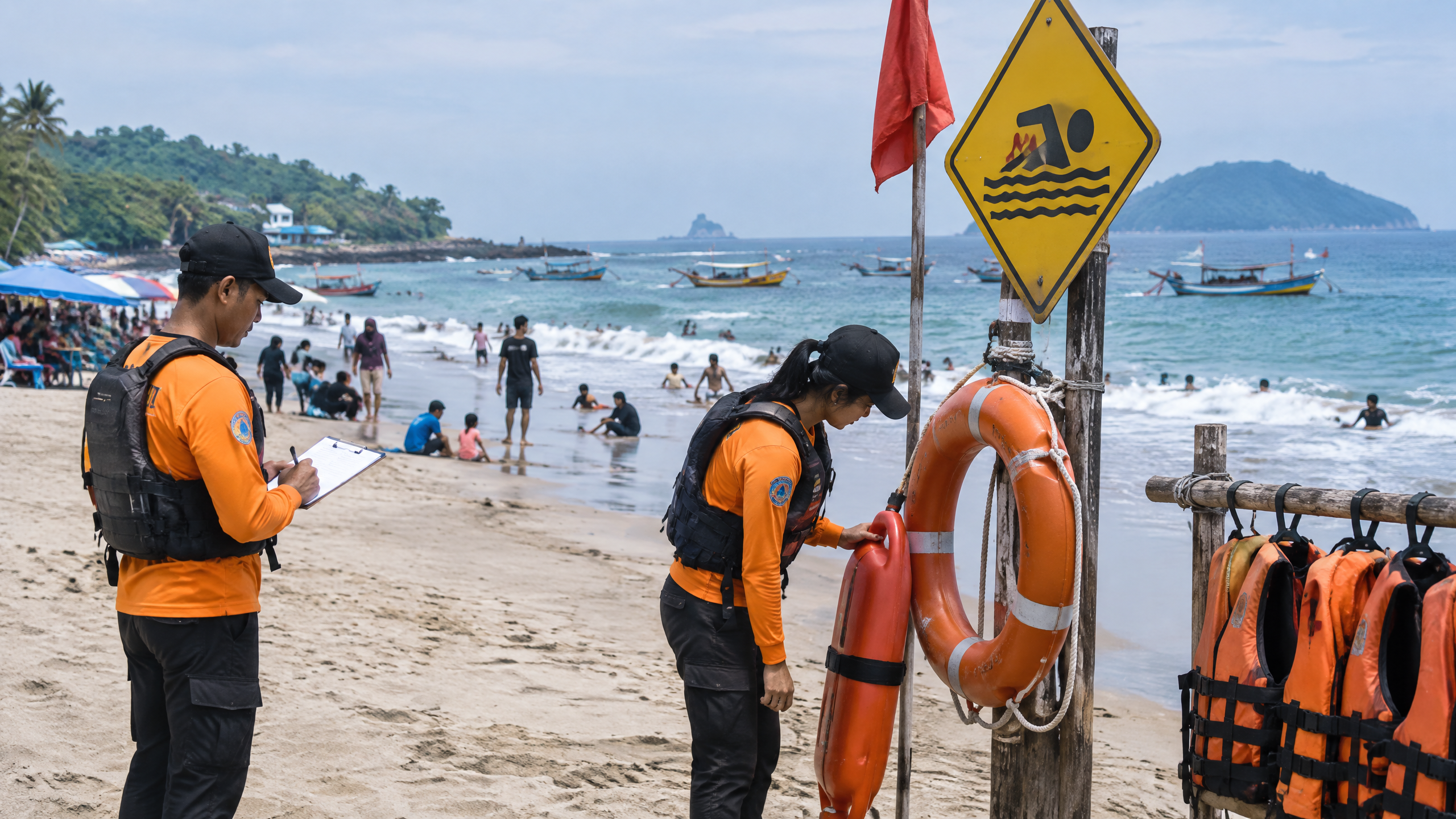
The government’s own pre-Eid coordination plan identified transparent entrance and food prices, traffic information, beach warnings and coordination among agencies as priorities. The council should turn those commitments into line items and performance indicators. A tourism allocation should show, for example, how many locations will receive warning signs, public-address equipment, first-aid supplies, trained beach personnel, communications equipment, sanitation services and post-season inspections.
Use coastal science as a budget test
There is a timely source of evidence for that review. BMKG conducted an integrated meteo-oceanographic survey in the Sunda Strait from 14 to 25 September 2026 to improve maritime observations and forecasts. The agency said the work would collect in-situ data on currents, waves, weather and sea conditions, including validation of its High Frequency Radar and ocean-atmosphere modelling. BMKG also linked the work to more integrated information around the waters near Mount Anak Krakatau and to a multi-hazard early-warning system.
The council does not need to turn the budget debate into a scientific exercise. It should, however, ask whether relevant BMKG information is being translated into local decisions. Are beach operators receiving clear, timely alerts? Are evacuation routes and assembly points visible and maintained? Are signs and public messages understandable to visitors from outside Banten? Which agency owns each warning system, and who pays for its upkeep after installation?
That last question is crucial. A new siren, camera, radio or shoreline structure can look effective in a project report while failing if batteries, connectivity, training or maintenance are unfunded. Councillors should request asset registers, maintenance schedules and evidence from drills rather than relying only on completion percentages.
Follow the rescue chain, not just the construction budget
Public safety also has to be examined across institutional boundaries. A Basarnas report on a February incident in Kragilan described a 55-year-old man being swept into the Sentul River after a road collision. A joint search involved the Banten Search and Rescue Office, police, military personnel, provincial and regency BPBDs, the city BPBD, community SAR volunteers and village officials. The victim was found the next day, 10 kilometres from the reported location.
The incident was not a beach accident, and it should not be presented as one. It does show why the council should examine the handoff between tourism officers, beach guards, BPBD, police, health services, volunteers and Basarnas. The useful metrics are specific: alert-to-deployment time, radio coverage, access for rescue vehicles, availability of boats and medical kits, the number of joint exercises, and whether incident logs are reviewed after every operation.
It should also be clear which costs belong to the regency and which require provincial or national cooperation. A budget that assumes another institution will supply boats, personnel or data without a written arrangement is not a resilience plan; it is an assumption.
Make receipts and results visible
Scrutiny should connect spending to public value. The council can ask the administration to publish a quarterly dashboard covering visitor numbers, complaints, accidents, rescue responses, traffic disruptions, warning-system uptime, beach inspections and maintenance spending. Tourism promotion should be reported separately from safety and resilience works, so a larger marketing allocation cannot obscure a shortfall in basic protection.
Procurement details matter as well. Councillors should seek the locations, specifications, contractors, completion dates and maintenance obligations for coastal facilities. They should compare projected visitor revenue and local economic benefits with the costs imposed on roads, waste collection, policing, emergency response and shoreline management. Public hearings in Anyer, Cinangka and affected inland communities would help test whether official reports match lived conditions.
What we know
- The regency’s official draft-budget presentation planned 2026 revenue at Rp3.13 trillion and reported lower general transfers, leaving less fiscal space.
- Serang recorded 233,752 tourism visits over 22–24 March 2026; the regency said roughly 75 percent were at Anyer and Cinangka destinations.
- BMKG’s 14–25 September 2026 Sunda Strait survey is intended to improve maritime observations, forecasts and integrated hazard information.
- Publicly accessible materials reviewed for this article do not provide a complete, line-by-line 2026 allocation for every tourism, coastal-resilience and safety programme. The council should obtain and publish those detailed schedules before approving or amending them.
For Serang, the most defensible tourism budget is not the one with the biggest visitor promise. It is the one that lets residents and visitors follow every rupiah from attraction to protection, and every protection measure from procurement to a real-world response.
Sources
- https://serangkab.go.id/berita/bupati-serang-ratu-zakiyah-sampaikan-raperda-apbd-2026-di-rapat-paripurna-dprd
- https://serangkab.go.id/berita/pemkab-serang-pastikan-wisatawan-aman-dan-nyaman-isi-liburan-lebaran-2026-di-pantai-anyer-cinangka
- https://serangkab.go.id/berita/libur-lebaran-233752-wisatawan-kunjungi-berbagai-destinasi-wisata-di-kabupaten-serang
- https://www.bmkg.go.id/berita/utama/bmkg-laksanakan-survei-meteo-oseanografi-terpadu-di-selat-sunda-untuk-perkuat-akurasi-layanan-maritim
- https://www.basarnas.go.id/berita/terseret-arus-1-pria-kp-badak-jaya-kragilan-banten-ditemukan-dalam-keadaan-meninggal-dunia
- https://banten.antaranews.com/berita/377082/kunjungan-wisata-banten-capai-700-ribu-didominasi-warga-jabodetabek