SERANG — Serang Regency’s investment story has a striking headline: the local government says realization reached Rp21.5 trillion in 2025, far above its stated combined foreign and domestic investment target of Rp6 trillion. The figure is being used to support the case for easier permits and a more welcoming business climate. But as the Serang Regency Legislative Council, or DPRD, enters the 2026 policy cycle, the more important test is what the investment has delivered locally.
Three questions require public answers: how many durable jobs went to residents, how much revenue reached the regency budget, and what protections are in place for workers seeking those jobs. The available official data confirms the scale of investment, but it does not yet provide a complete Serang-specific answer to any of the three.
What we know
- The Serang Regency Government reported Rp21.5 trillion in 2025 investment, against stated targets of Rp2.7 trillion for foreign investment and Rp3.3 trillion for domestic investment. It also said 1,845 domestic and foreign investors were processing permits by March 2026.
- Banten recorded Rp130.2 trillion in investment in 2025 and 214,216 jobs, according to the provincial investment agency. Serang was listed among the province’s biggest contributing areas, but the release did not publish a separate Serang job total.
- The 2025 Serang APBD budgeted Rp1.136 trillion in own-source revenue, known as PAD, within total regional revenue of Rp3.598 trillion. Those are budget figures, not proof of how much industry actually contributed.
Question one: where are the Serang jobs?
Investment realization is not the same as employment realization. The provincial total of 214,216 jobs is useful context, but it cannot be assigned to Serang without a district-level breakdown. Nor does the Serang investment announcement attach a job count to its Rp21.5 trillion figure.
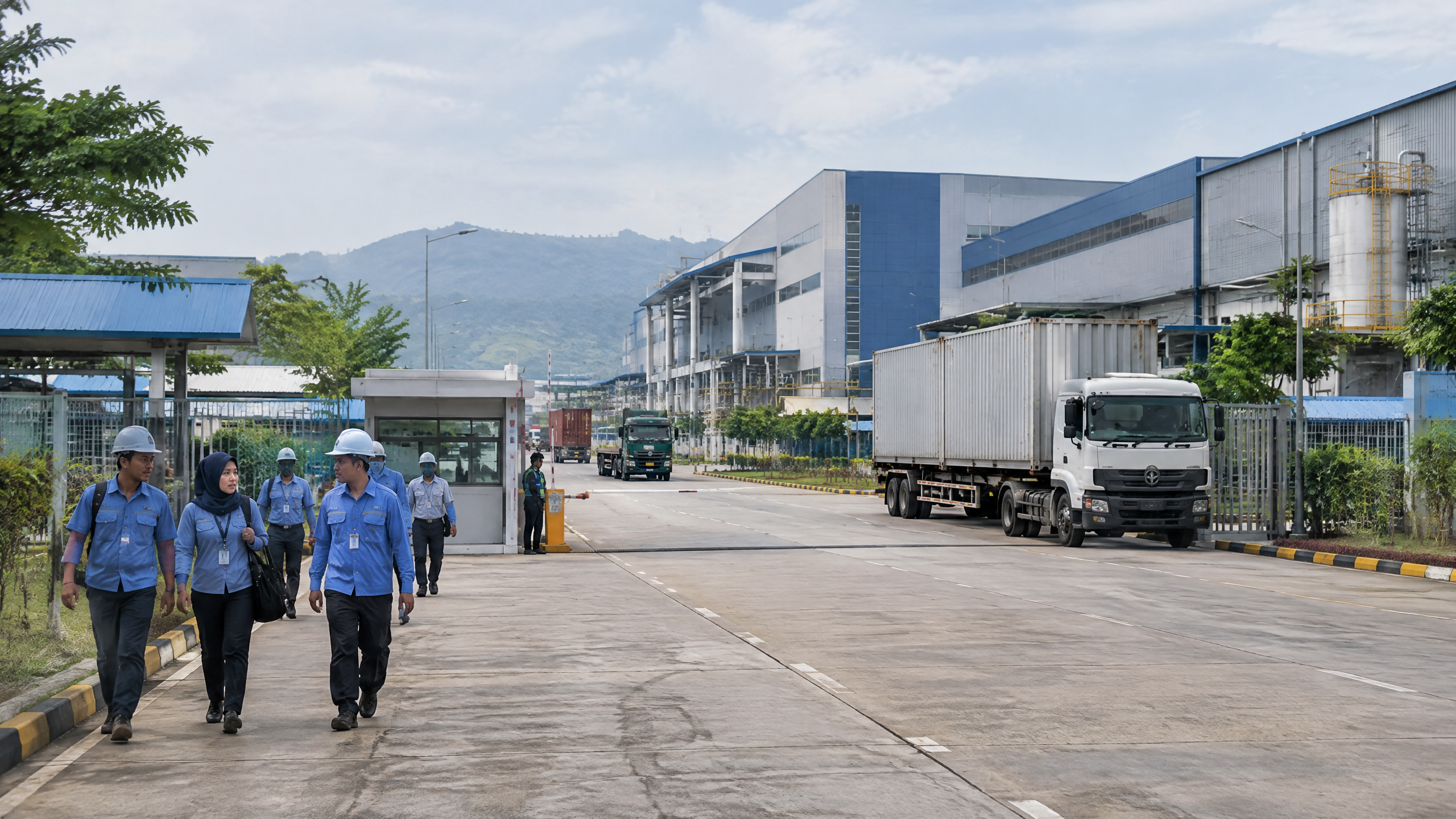
That gap matters in a regency whose industrial areas have long been a focus of labor politics. At the May Day event in Modern Cikande on May 3, 2026, more than 5,000 workers were reported to have demanded better infrastructure, action against labor brokers, and progress on a labor regulation. The regency government said it had formed an anti-extortion task force and worked with police on cases involving alleged job brokering.
DPRD members should therefore ask the executive and companies to publish a job ledger: positions created by project, Indonesian and foreign workers, permanent and non-permanent status, local-resident hiring, wages, and whether the jobs remain after construction ends. Without those details, a large investment number cannot show whether growth is improving household security.
Question two: what reaches the local budget?
The 2025 APBD regulation sets PAD at Rp1.136 trillion, made up of regional taxes, retributions, separated asset-management income, and other legitimate PAD. The same document sets total regional revenue at Rp3.598 trillion, with transfers accounting for the largest share.
This distinction should be central to legislative oversight. A company’s investment value does not automatically become regency revenue. The APBD document does not identify the portion of PAD generated by new industrial projects, nor does the public investment announcement show the fiscal return from the Rp21.5 trillion reported for 2025.
DPRD should request a project-by-project explanation of local taxes and retributions, land and building-related charges, service costs, incentives, arrears, and the timing of payments. It should also disclose which revenues are legally collected by the regency and which flow to the province or national government. That would replace a general promise of “multiplier effects” with a measurable public balance sheet.
Question three: can faster permits be matched by stronger safeguards?
The regency government credits online licensing through the national OSS system and its public service mall for making investment permits easier. That may reduce administrative friction. It also raises a governance question: can speed, transparency, and enforcement advance together?
At the May Day gathering, the head of the Serang workers’ association said a labor regulation submitted to DPRD had not been discussed. The same event highlighted dark roads around industrial zones and alleged labor-broker practices. These are not side issues. They affect whether investment is accessible to residents and whether workers can reach workplaces safely without paying unofficial fees.
For 2026, lawmakers should publish the status of the proposed labor regulation, the number and outcome of reported job-brokerage cases, and a timetable for infrastructure fixes around industrial estates. They should also require regular public reporting on local hiring and workplace compliance rather than waiting for disputes to expose weaknesses.
The data gap is itself a policy issue
Banten’s economy grew 5.64 percent year-on-year in the first quarter of 2026, with manufacturing contributing 30.02 percent of the provincial economy. In February, Banten had 5.83 million employed people and an open unemployment rate of 6.59 percent. Yet the share of formal workers fell to 52.19 percent from a year earlier. Those provincial indicators show why investment quality matters, but they cannot substitute for Serang-specific reporting.
As of the working date, September 20, 2026, the latest official material cited here does not provide a current Serang breakdown linking investment, jobs, and PAD. DPRD’s first responsibility should be to close that gap. The public does not need another headline alone; it needs a traceable answer showing who was hired, what the regency collected, and whether the rules protected people along the way.
Sources
- https://serangkab.go.id/berita/investasi-naik-bupati-serang-ratu-zakiyah-raih-award-2026
- https://serangkab.go.id/berita/may-day-2026-bupati-serang-harap-investasi-terus-tumbuh-ciptakan-lapangan-pekerjaan
- https://serangkab.go.id/storage/document/perda-apbd-tahun-2025_1745294468.pdf
- https://www.dpmptsp.bantenprov.go.id/berita/realisasi-investasi-provinsi-banten-tahun-2025-lampaui-target-capai-rp1302-triliun
- https://bantenprov.go.id/index.php/berita/triwulan-i-2026-ekonomi-banten-tumbuh-564-persen-serapan-tenaga-kerja-meningkat
- https://bantenprov.go.id/index.php/berita/kinerja-investasi-banten-2025-memuaskan-lampaui-target-dan-naik-ke-peringkat-4-nasional