Short answer: Banten’s 2026 Disaster Risk Reduction Month, or Bulan Pengurangan Risiko Bencana (PRB), is built around practical public education, institutional coordination and community resilience. From 13 to 15 October, the official program places exhibitions and learning sessions in Serang, a technology-failure seminar in Cilegon, and a cultural visit and tree planting at Banten Lama.
For visitors, the most useful lesson is that disaster safety is not a separate activity from tourism. It involves knowing local hazards, reading official warnings, understanding evacuation arrangements, and expecting destinations, businesses and authorities to work together. The provincial agenda is current for the 14 October 2026 working date, but it does not by itself confirm visitor registration, capacity or access rules.
What is happening in Banten from 13 to 15 October 2026?
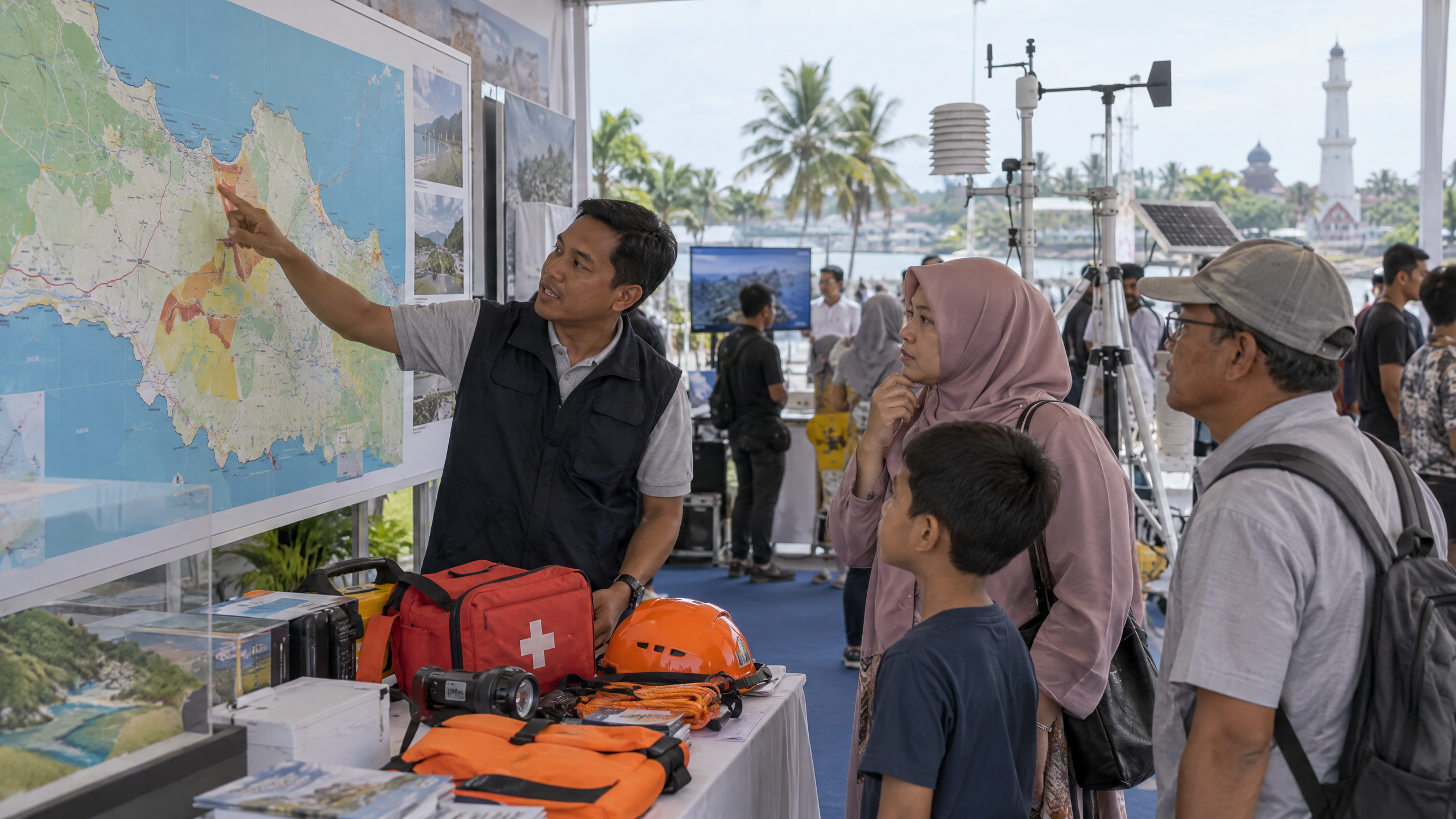
The Banten provincial government lists the main public-facing elements at the Kawasan Pusat Pemerintahan Provinsi Banten (KP3B) in Serang. These include a three-day MSME exhibition at the grounds of Masjid Raya Al-Bantani, a school disaster-education quiz at the KP3B badminton hall, and sharing sessions. The province also lists a 13 October technology-failure seminar at Royale Krakatau Hotel in Cilegon.
On 14 October, the schedule includes a morning fun walk, the exhibition and school quiz, sharing sessions, and a Forum Kalaksa meeting at the Banten governor’s residence. The evening peak program is listed at Masjid Raya Al-Bantani. On 15 October, the exhibition continues, followed by a cultural visit and tree planting from 9 a.m. until finished at Banten Lama in Kasemen, Serang.
The schedule is a guide to listed activities, not a promise that every session is open to walk-in tourists. Visitors should check the latest instructions from organizers before travelling, especially for indoor sessions and the Cilegon seminar.
What can visitors learn from the program?
- Risk awareness: A disaster is not only an event in nature. BNPB’s 13 October sharing-session report says risk is also shaped by land-use change, environmental damage, urbanization and development that does not account for local hazards.
- From warning to action: An early warning is information; early action is the decision and preparation that follow it. BNPB highlighted the need for clear roles, resources, funding and procedures so warnings lead to protective action.
- How systems fit together: BNPB identified regulation, institutions, planning, standards and procedures, financing, and monitoring and evaluation as connected parts of an effective national disaster-management system.
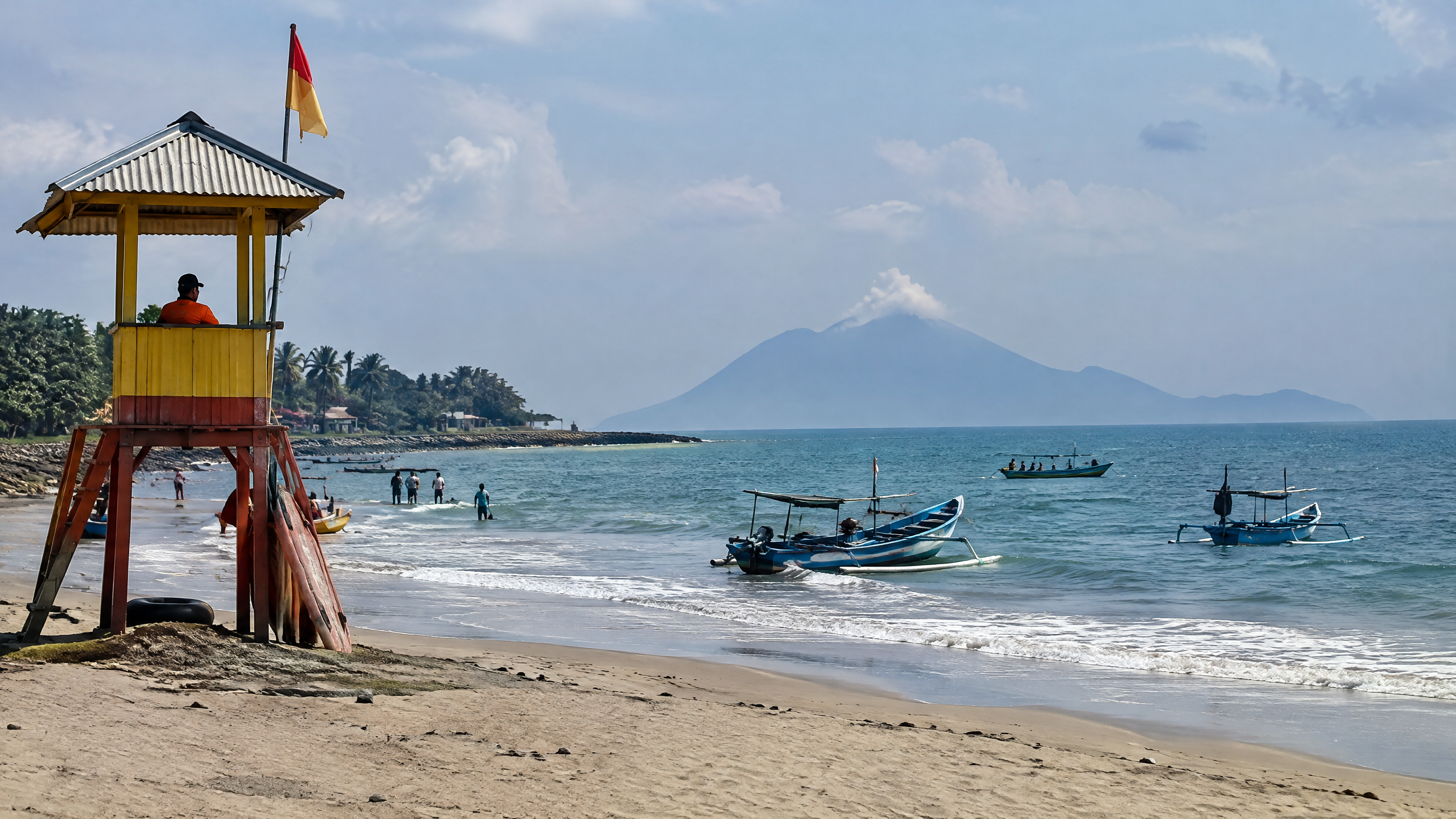
- Tourism safety: BMKG’s earlier guidance for Tanjung Lesung says a disaster-ready destination needs procedures, trained people and facilities. It also stresses access to accurate weather and maritime information.
- Coastal hazards: BMKG’s Tanjung Lesung material identifies high waves, tidal flooding, earthquakes and tsunamis as concerns for coastal and marine destinations. The guidance is from December 2021, so it is background safety advice, not a forecast for October 2026.
- History as preparedness: BNPB’s event coverage points to the 1883 Krakatau eruption and the 2018 Sunda Strait tsunami as reminders to strengthen warning systems, coordination and community readiness.
- Environment and resilience: The tree-planting activity at Banten Lama connects environmental stewardship with risk reduction, while the cultural visit shows that preparedness can be part of a place’s civic and heritage life.
- Shared responsibility: The provincial government describes PRB as collaboration among national and local government, disaster-management actors, business, communities and the public—not a task for emergency agencies alone.
What do PRB and disaster resilience mean?
PRB is Indonesia’s annual disaster-risk-reduction observance. Its focus is reducing exposure and vulnerability before a disaster, rather than concentrating only on emergency response afterward. Resilience means the capacity of people, institutions and places to prepare, withstand disruption, respond and recover while maintaining essential services.
For a traveller, that definition has practical implications: ask a hotel or attraction where the evacuation route is, keep an eye on official BMKG information for weather and marine conditions, follow local instructions, and do not treat a scenic coastal location as risk-free. These are general safety habits, not a substitute for an official warning or site-specific direction.
What is confirmed about the 2026 Banten program?
- Banten is the host of the 2026 Bulan PRB observance.
- The provincial government’s published dates are 13–15 October 2026.
- Listed venues include KP3B and Masjid Raya Al-Bantani in Serang, Royale Krakatau Hotel in Cilegon, and Banten Lama in Kasemen, Serang.
- The announced activities include an MSME exhibition, student quiz, sharing sessions, a technology-failure seminar, fun walk, Forum Kalaksa, a peak evening program, cultural visit and tree planting.
- BNPB’s 13 October coverage confirms that the Serang sharing session addressed integrated planning, spatial policy, financing, local-government capacity and the gap between warnings and action.
What remains unclear for visitors?
As of 14 October 2026, the provincial agenda used for this article does not state whether each activity permits unrestricted public entry, requires registration, has a capacity limit, or provides transport and accessibility arrangements. It also does not publish a visitor map, detailed emergency contacts, or a consolidated English-language timetable. No claim should therefore be made about guaranteed admission or on-site facilities without a newer organizer notice.
The safest way to use the event is as a learning opportunity: verify the venue and time, monitor official weather and hazard information, learn the nearest evacuation direction at the destination, and respect instructions from local authorities. Banten’s program offers a tourism lesson with lasting value—prepared visitors and prepared destinations reduce risk together.
Sources
- https://bantenprov.go.id/berita/provinsi-banten-jadi-tuan-rumah-bulan-pengurangan-risiko-bencana-2026
- https://banten.antaranews.com/berita/392604/provinsi-banten-jadi-tuan-rumah-bulan-pengurangan-risiko-bencana-2026
- https://bnpb.go.id/berita/bnpb-dorong-penguatan-sistem-nasional-penanggulangan-bencana-melalui-integrasi-kebijakan-dengan-kolaborasi-pusat-dan-daerah
- https://www.bmkg.go.id/berita/daerah/membangun-destinasi-wisata-siaga-bencana-di-kawasan-pariwisata-tanjung-lesung-provinsi-banten