The Great Mosque of Banten: A Living Monument of Architecture and Religious Harmony
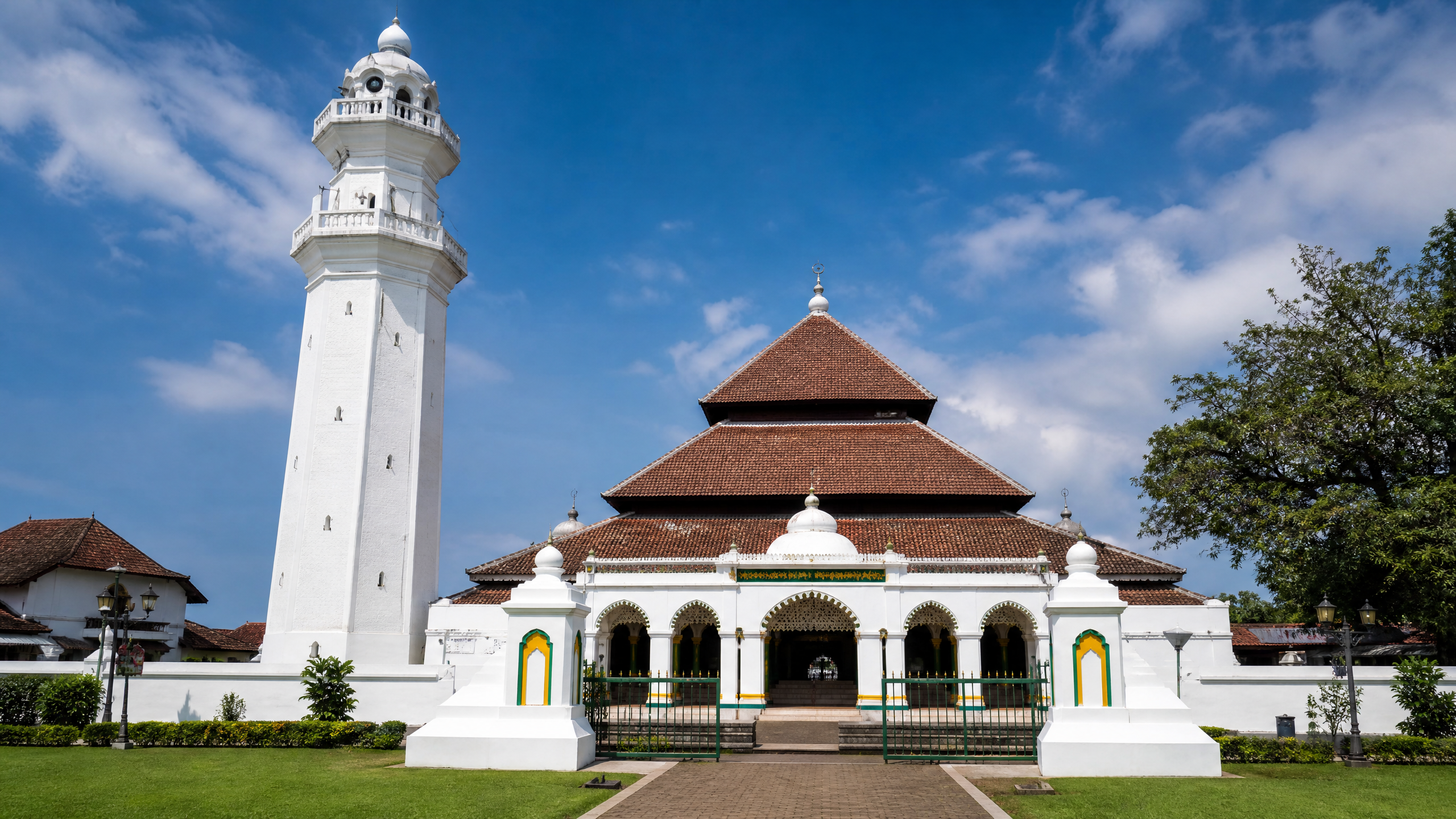
BANTEN — Standing amid the ruins and living streets of Old Banten, the Great Mosque of Banten remains one of the province’s most enduring symbols — not only of Islamic worship but of cultural exchange and religious harmony that shaped the region centuries ago. Locals and visitors alike are drawn to its unusual silhouette: a tiered Javanese roof, a lighthouse-like minaret, and decorative elements that recall Chinese and European craftsmanship. Together they tell the story of Banten’s place as a bustling maritime hub where diverse peoples met, traded and built a shared civic space.
Built in the early era of the Banten Sultanate in the mid-16th century, the mosque was more than a place for prayer; it anchored a growing port city that attracted merchants from across Asia and Europe. As the sultanate grew prosperous from pepper trade and maritime commerce, its principal mosque evolved architecturally and socially to reflect a multilingual, multi-ethnic community. The site remains part of the larger Banten Lama (Old Banten) complex, which includes royal graves, marketplaces and the vestiges of fortifications — a reminder of the city’s strategic importance in regional history.
Architecturally, the Great Mosque of Banten is remarkable for its synthesis of styles. The core prayer hall preserves the traditional multi-tiered, pyramidal roof common to Javanese mosque architecture — a form that predates large domes and has spiritual and climatic logic in the archipelago. That classic silhouette is counterpointed by a distinctive minaret often referred to locally as a “lighthouse.” Rising separately from the main structure, the tower served practical maritime needs as a guidance point for ships approaching Banten Bay and also functioned as a watchtower. Its cylindrical form and lantern-like top reflect practical European influences introduced through colonial contact and maritime trade.
Visitors often notice Chinese ceramic tiles and decorative motifs integrated into the mosque’s inner court and surrounding structures. These fine details reflect the presence of Chinese artisans and merchants in Banten’s cosmopolitan port society. Doors, carved beams and even certain ornamental fixtures show European craftsmanship and stylistic cues — a visual archive of the exchange between local, Chinese and European builders and patrons.
Beyond aesthetics, the Great Mosque has been a center for social life and religious rituals across generations. The mosque compound contains several tombs of Banten’s founding figures and sultans, which continue to be sites of pilgrimage and remembrance. During Ramadan, Eid and other local observances, the mosque fills again with the rhythms of community life, reinforcing its role as a living, not merely historical, institution.
Preservationists and local authorities in Banten have increasingly focused on protecting the mosque and surrounding Old Banten area as a cultural heritage zone. Conservation efforts balance the need for structural reinforcement and restoration with careful attention to original materials and construction techniques. Challenges remain: weathering from coastal winds, rising tourist pressure and competing development interests require ongoing coordination between heritage experts, local leaders and community stakeholders.
For residents of Banten, the Great Mosque is more than an architectural curiosity; it is a proud emblem of a past defined by openness and coexistence. Its layered forms — Javanese roofs, Chinese tiles, European touches and the ever-watchful minaret — visually narrate a history in which faith and commerce, local tradition and global connection, converged on Banten’s shores. As efforts to preserve and interpret the site continue, the mosque stands as both a reminder of the region’s plural past and a touchstone for present-day conversations about identity, heritage and community in Banten.