
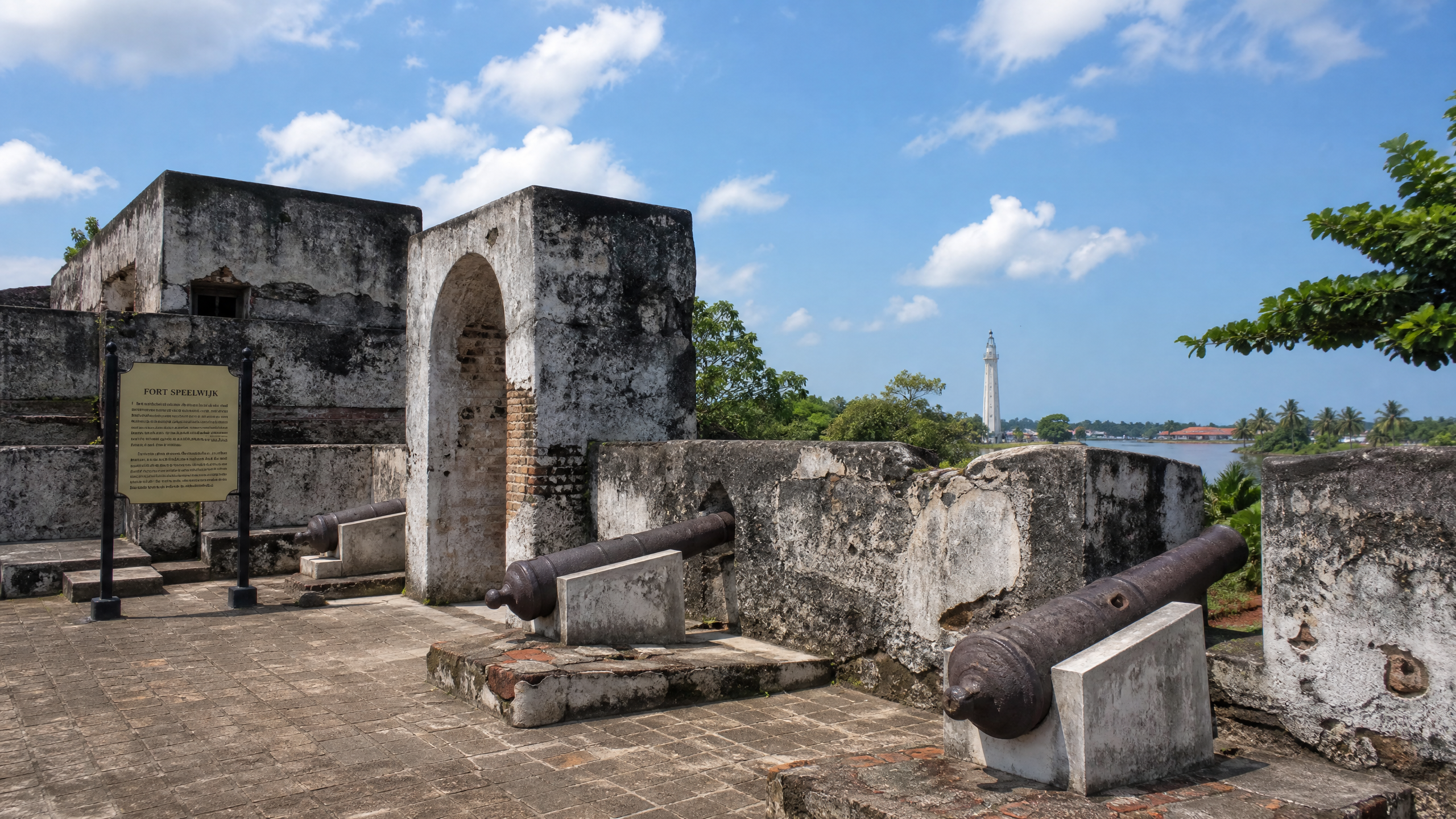
Speelwijk Fort: A Quiet Sentinel of Dutch Colonial History in Old Banten
Nestled within the mangrove-bordered grounds of Old Banten (Banten Lama), Fort Speelwijk stands as a muted but enduring symbol of a tumultuous chapter in the region’s past. Once a strategic outpost of the Dutch East India Company (VOC), the fort today attracts history enthusiasts, school groups and local residents who come to trace the layers of colonial contact that helped shape modern Banten. While the structure no longer bristles with cannon, its weathered walls and scattered ruins continue to tell a story of trade, conflict and cultural change.
Built during the VOC era, Fort Speelwijk formed part of the network of Dutch fortifications established to control maritime trade and secure interests along the Java coastline. The VOC’s growing influence in the Indonesian archipelago during the 17th and 18th centuries brought it into direct competition with the once-powerful Banten Sultanate, a major trading polity that had for centuries linked the Indonesian archipelago with the broader Indian Ocean world. Fort Speelwijk was one of several installations intended to oversee shipping lanes, protect colonial warehouses and assert Dutch presence near the mouth of the Cibanten estuary and the old port area.
Architecturally, the remains of Speelwijk give visitors a tangible sense of 17th–18th century military design adapted to a tropical coastal environment. What survives today are fragments of ramparts and low bastions, interspersed with embrasures that once pointed out to the sea. The masonry — built from brick, coral stone and local materials — shows the practical, utilitarian approach of VOC engineers: compact, functional structures meant to house gun platforms, storage and garrison quarters rather than grand palaces. Over the centuries, rising tides, tropical weather and shifting sands have softened its profile, but the fort’s footprint remains readable to those who know where to look.
During the Dutch period, the fort played a role not only in military defense but also as part of the broader administrative and economic apparatus. Control of forts like Speelwijk helped the VOC regulate trade flows, collect duties and project authority over coastal communities. For local populations, the presence of such fortifications signaled a new phase of foreign influence that altered commercial patterns and political relations in Banten. The fort’s history is therefore inseparable from the stories of cooperation, resistance and accommodation that characterized local–colonial interactions.
In the post-colonial century, Fort Speelwijk fell into partial ruin, as economic priorities and urban expansion shifted away from some parts of Old Banten. In recent decades, however, renewed interest in heritage has brought the site back into the spotlight. The fort is now part of the Old Banten cultural landscape that includes the Great Mosque, Kaibon Palace ruins and the remains of the old port — all of which receive visitors keen to understand Banten’s influential role in regional history. Local tourism initiatives, guided walks and school field trips increasingly include Speelwijk as a stop on heritage trails that aim to contextualize the VOC story within Banten’s own long history.
Despite this renewed attention, the fort faces ongoing preservation challenges. Coastal erosion, vegetation overgrowth, and limited conservation funding threaten the integrity of the remaining structures. Local activists, community leaders and the Banten cultural authorities have advocated for better protective measures, site interpretation, and sustainable tourism management so that the fort can be enjoyed by future generations without being overwhelmed by environmental and infrastructural pressures.
For residents of Serang and surrounding communities, Fort Speelwijk is more than a remnant of colonial rule; it is a reminder of Banten’s layered past and a potential asset for cultural and educational development. Strengthening conservation efforts, improving visitor facilities, and involving local communities in storytelling and site management are practical steps recommended by historians and heritage professionals alike.
As Old Banten continues to attract attention from domestic and international visitors, Fort Speelwijk offers a quiet, evocative stop on the journey through the region’s history. Its battered walls may no longer fire warning shots across the estuary, but they still prompt reflection on the transformations of the past and the importance of preserving those traces for the future.

