Andra Soni Inspects TPA Jatiwaringin, Pledges Sweeping Measures to Fix Tangerang’s Waste Crisis
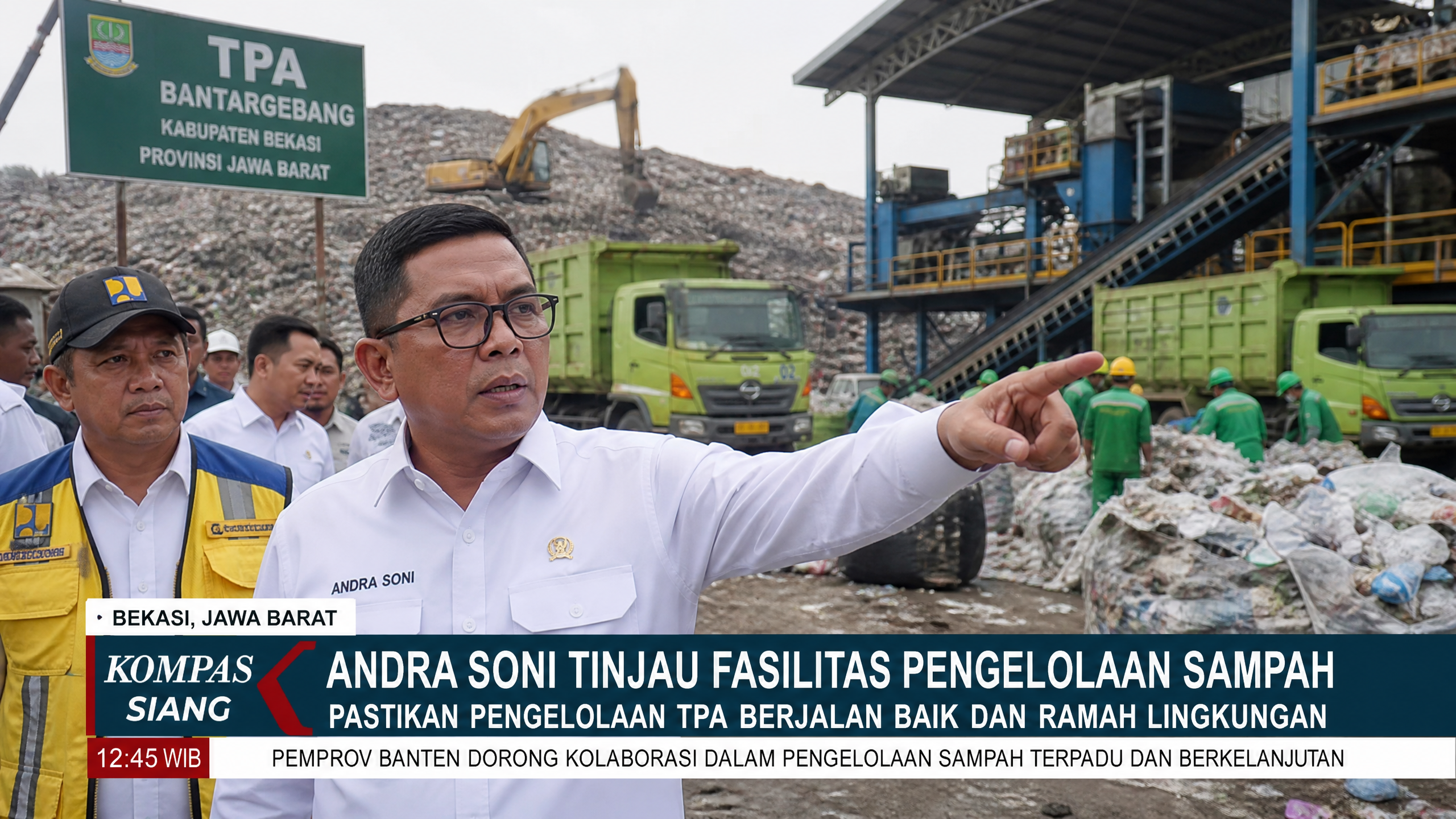
Governor Andra Soni made a high-profile visit to TPA Jatiwaringin in Tangerang Regency on Tuesday, underscoring a renewed provincial push to tackle persistent waste management problems that have long affected local communities across Banten. The on-site inspection, attended by provincial and municipal officials, environmental agency representatives and community leaders, was part of a wider initiative to strengthen environmental policy and accelerate concrete improvements at the city’s main disposal site.
Standing amid piles of compacted refuse and visible leachate runoff, Governor Andra Soni described the situation as unacceptable for a rapidly urbanizing region. “This visit is a clear message: waste management is a top provincial priority. We will not allow public health and the environment to be compromised,” he said, outlining immediate and medium-term steps his administration intends to take. The governor emphasized coordination with Tangerang municipal authorities and pledged to fast-track funding for critical upgrades.
TPA Jatiwaringin has been struggling with overcapacity, frequent odors, occasional fires, and concerns about groundwater contamination — conditions that residents in surrounding neighborhoods have long complained about. During the inspection, officials noted overcrowded cells, inadequate leachate containment, and inefficient sorting facilities. Provincial environmental agency (Dinas Lingkungan Hidup) engineers briefed the governor on technical assessments already under way and recommended a combination of operational reforms and infrastructure financing.
Among the measures announced, the governor called for: stricter enforcement of source-segregation rules; expansion of community-based recycling and composting programs; modernization of the site’s leachate treatment and methane capture systems; and a feasibility study for a regional waste-to-energy plant. Andra Soni also urged the acceleration of a proposed provincial regulation to harmonize waste-management standards across Banten’s cities and regencies, aiming to reduce illegal dumping and formalize transfer station networks.
Local officials present at the site pledged immediate action on short-term problems. Tangerang Regency representatives said they would increase patrols to prevent open burning, improve waste transport scheduling to reduce peak congestion at the tipper, and deploy mobile sorting units to better separate organic waste from recyclables. Health outreach and monitoring for residents living adjacent to the TPA were also promised, including temporary clinics and air-quality checks.
Community reaction to the governor’s visit was cautiously optimistic. A neighborhood leader from the affected area welcomed the commitment but urged quick implementation. “We’ve heard promises before. We need real fixes — better leachate control, no more nightly smoke, and clear timelines for relocation if necessary,” she said. Local environmental activists emphasized the importance of transparency and community participation, calling on the provincial government to publish action plans and performance targets.
The visit also highlighted funding and governance challenges. Governor Soni indicated the provincial budget (APBD) would cover initial upgrades and that his office would pursue national funding and public-private partnerships to support larger-scale projects. He stressed that long-term success would depend on behavior change at the household level as much as on technical solutions: “The best facility means little if people do not reduce, reuse and separate their waste.”
As the governor’s delegation departed the hot and crowded site, officials committed to releasing a detailed action timeline within three weeks, including measurable milestones and responsible agencies. For residents of Tangerang and neighbouring districts, the promise of clearer policy and faster action offers a potential turning point in Banten’s ongoing struggle with urban waste — but the real test will be in meeting the deadlines and delivery that communities have demanded for years.