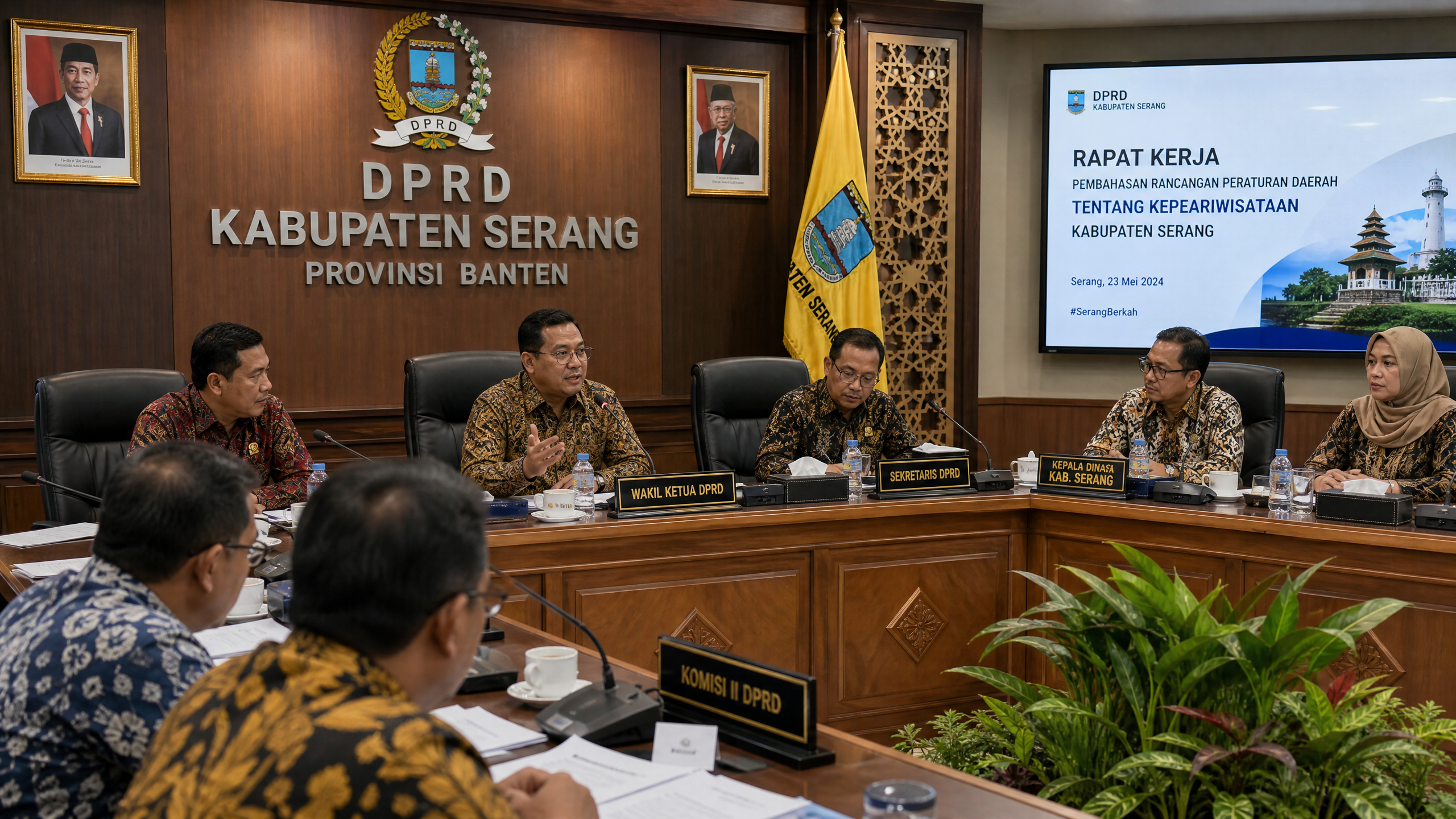
Bottom line: Banten’s latest verified inflation reading is 3.14% year on year in September 2026, with a Consumer Price Index of 111.29. For household policy, that points to targeted action on food supply and prices—not a blanket claim that every household’s costs rose by 3.14%—while the province still needs better evidence on October prices and on how the pressure differs by city and income group.
The figure is the latest provincial release available as of 14 October 2026. It compares the cost of the BPS consumer basket in September 2026 with September 2025. BPS’s provincial statistics table records annual inflation of 2.95% in August and 3.14% in September, while an ANTARA FOTO report, citing BPS Banten, confirms the September index and identifies food, beverages and tobacco as a major pressure point.
What does Banten’s 3.14% inflation rate actually measure?
Year on year (yoy) is the change over 12 months. It is not a promise that each family’s shopping bill rose by exactly 3.14%, and it is not the same as a one-month increase. The CPI is a weighted index: items that households buy more often or spend more on have a larger influence. A family that spends heavily on rice, cooking ingredients or transport can therefore experience a different inflation rate from the provincial average.
The September result should also be read against the national release. Bank Indonesia, using BPS data, reported national inflation of 0.30% month on month and 3.28% yoy in September. Nationally, volatile food inflation reached 1.46% month on month and 5.03% yoy. Those national figures do not replace Banten’s local measure, but they show why food availability remains a central policy concern.
Which household costs are sending the clearest warning?
The BPS-based local account points to the food, beverages and tobacco expenditure group, which ANTARA reported at 3.96% inflation in Banten in September. A more granular example comes from Tangerang City’s official government report: city inflation was 2.66% yoy and 0.27% month on month, with red chilli up 15.69%, bird’s-eye chilli 7% and broiler chicken 4.48% during the month.
These numbers matter for policy because food shocks are felt immediately by lower-income households, even when the province-wide average remains moderate. They also suggest that monitoring should focus on supply routes, harvest timing, market distribution and substitution pressures, rather than relying only on the headline CPI.
What should household policy prioritise now?
- Protect food access. Provincial and city governments should keep checking stocks, prices and distribution for rice, chillies, eggs and chicken, and publish clear information when supplies or prices change. Any market operation or assistance should be targeted to documented pressure points and vulnerable households.
- Prevent supply gaps. In an August 10 inflation-control meeting, Banten’s Agriculture Office said rice supply was relatively safe but warned that planting needed to accelerate to reduce the risk of a rice-balance deficit in September–December. The same meeting recorded a need to speed up rice and maize planting, secure water, control pests and accelerate chilli planting.
- Keep support precise. The headline rate does not justify assuming that all families need the same intervention. Local governments should use household assistance, school-food or other social-protection channels where eligibility is established, while avoiding policies that disrupt farmers’ incentives or create shortages.
- Coordinate beyond prices. The Agriculture Office identified coordination among agriculture, food-security, trade, Bulog and distributors as part of the response. That is more durable than treating each monthly release as an isolated crisis.
What are the verified facts behind the release?
- Banten’s September 2026 yoy inflation: 3.14%; CPI: 111.29.
- Official BPS table: Banten yoy inflation was 2.95% in August 2026 and 3.14% in September 2026.
- ANTARA’s BPS-based account: food, beverages and tobacco inflation was 3.96% in September.
- Tangerang City’s official account: 2.66% yoy and 0.27% month on month, with notable chilli and chicken increases.
- Bank Indonesia’s national context: 0.30% month on month and 3.28% yoy nationally in September.
What do yoy, month on month and volatile food mean?
Yoy compares the same month one year earlier. Month on month (mtm) compares with the immediately preceding month and is more sensitive to short-term shocks. Volatile food is a policy category for food prices that can move sharply with harvests, weather, distribution and input costs. Bank Indonesia said national September volatile-food inflation was driven mainly by chillies, chicken, rice and eggs, amid lower production in some centres and higher input costs.
What do we know, and what remains unclear?
What we know: September’s provincial inflation accelerated from August’s 2.95% yoy to 3.14%. Food-related prices are a clear pressure channel, and official local reporting shows that some cities and individual commodities moved differently from the provincial average. Banten’s own August planning documents also show why supply policy matters: the Agriculture Office projected an August rice surplus but warned about the September–December balance.
What remains unclear: As of the 14 October work date, no verified Banten October 2026 CPI release was available in the sources reviewed. The September figure does not establish October’s direction. The accessible provincial summary also does not, by itself, provide a complete city-by-city breakdown, household-income distribution or a full contribution table for every expenditure group. Policymakers should therefore avoid claiming that inflation is either uniformly high or fully resolved.
The practical reading is straightforward: keep staple-food supply and distribution under close observation, make assistance evidence-based, and wait for the next official BPS release before drawing conclusions about October. For households, the 3.14% figure is a warning about purchasing power, not a universal price tag on every family’s budget.
Sources
- https://banten.bps.go.id/id/statistics-table/2/MjE5IzI=/inflasi-tahun-ke-tahun-menurut-bulan-di-provinsi-banten.html
- https://www.bi.go.id/id/publikasi/ruang-media/news-release/Pages/sp_2820926.aspx
- https://dispertan.bantenprov.go.id/berita/rapat-pengendalian-inflasi
- https://tangerangkota.go.id/berita/detail/69522/harga-komoditas-cabai-melonjak-inflasi-kota-tangerang-stabil-di-angka-2-66-persen
- https://www.antarafoto.com/view/2876307/banten-inflation-in-september-2026-is-314-percent