Banten recorded Rp66.3 trillion in realized investment during January–June 2026, up 9.23 percent year on year and equal to 46.63 percent of its Rp142.19 trillion annual target. Kabupaten Tangerang dominated the distribution with Rp29.04 trillion, while Kota Tangerang reported Rp11.7 trillion and 29,887 jobs. The headline is strong, but as of 14 October 2026 the province-wide first-half jobs total and proof that local businesses have won supplier contracts are not yet clearly published in the official sources reviewed.
The latest provincial release from the Banten Investment and One-Stop Integrated Services Agency (DPMPTSP) puts domestic investment (PMDN) at Rp42.21 trillion, about 64 percent of the total, and foreign investment (PMA) at Rp24.05 trillion, about 36 percent. Banten says the result places it among Indonesia’s five largest investment destinations and gives it roughly 6.6 percent of national first-half realization. These figures describe reported investment realization, not necessarily completed construction, permanent employment or money already circulating among local firms.
Where is Banten’s first-half investment concentrated?
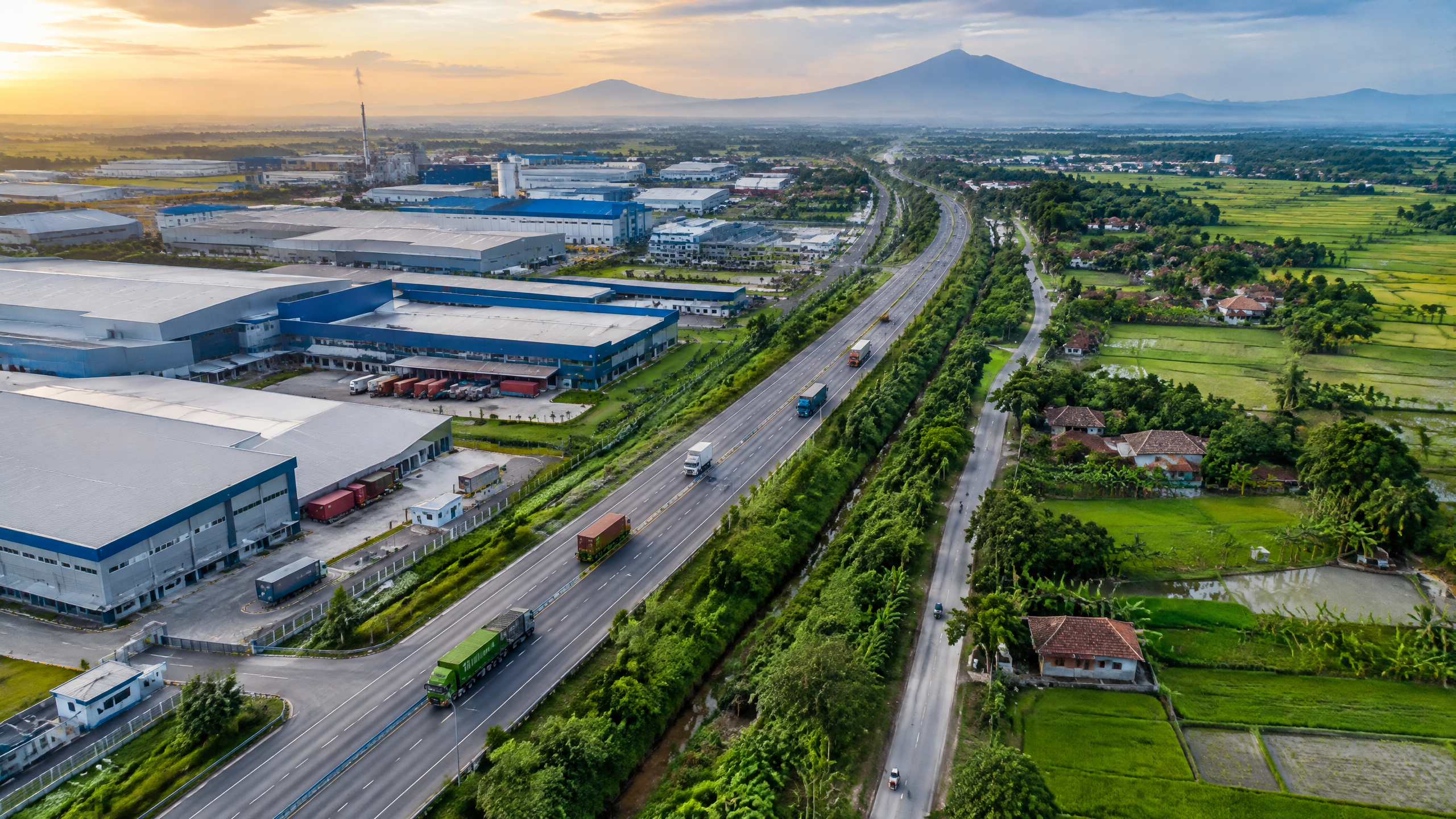
Kabupaten Tangerang accounted for about 43.8 percent of provincial realization, making it the clearest center of gravity. The provincial release lists Kota Tangerang next, followed by Kota Cilegon, Kota Tangerang Selatan, Kabupaten Serang, Kabupaten Lebak, Kota Serang and Kabupaten Pandeglang. It does not provide a comparable amount for every regency and city in the same release. Kota Serang, however, was reported to have exceeded 129 percent of its annual target.
Kota Tangerang’s separate DPMPTSP data offer the most detailed city-level picture. Its Rp11.7 trillion total comprised Rp8.385 trillion of PMDN and Rp3.349 trillion of PMA, spread across 18,136 projects. Housing, industrial estates and offices contributed about Rp3.340 trillion; transport, warehousing and telecommunications Rp1.548 trillion; and chemical and pharmaceutical manufacturing Rp1.156 trillion. Trade and repair, rubber and plastics, food manufacturing, other services, non-metallic minerals, hotels and restaurants, and machinery, electronics and optics made up the remaining listed sectors.
At the other end of the province, Kabupaten Pandeglang recorded Rp409 billion, or 57.3 percent of its Rp714 billion annual target. PMDN contributed Rp261 billion and PMA Rp147 billion. Food crops, plantations and livestock led its sector mix at Rp125 billion, followed by services at Rp93.01 billion and food manufacturing at Rp69 billion. The report links investment interest in five districts to the Serang–Panimbang toll-road corridor, but it does not establish that the road alone caused the realization.
How many jobs has the investment created?
The answer depends on the geographic unit and reporting period. Kota Tangerang reported 29,887 workers absorbed in the first half, while Pandeglang reported 634 new workers. Those are useful local indicators, not a province-wide total. The provincial DPMPTSP release on Rp66.3 trillion does not state a first-half employment figure in the material reviewed.
The latest comparable province-wide number located is for the full year 2025: Rp130.2 trillion in investment was reported to absorb 214,216 workers, including Indonesian and foreign workers. That annual figure must not be added to the 2026 city figures or presented as a measure of January–June 2026 employment. For national context only, BKPM reported 1,448,862 direct Indonesian workers from all Indonesian investment in the first half of 2026.
In other words, Banten can document jobs at city and regency level, but readers should be cautious about claims that the provincial surge has already created a particular number of jobs. A consolidated first-half figure, including how many positions are new, temporary, Indonesian or foreign, remains a reporting gap.
Are local suppliers and UMKM benefiting?
Local-supply-chain integration is now an explicit policy question. The provincial government says investment should create jobs, transfer technology and give local entrepreneurs and UMKM a place in the investment chain. At the 9–11 October Karya Kreatif Banten and Banten Investment Forum in South Tangerang, DPMPTSP and Bank Indonesia promoted business matching, product curation, financing, market access and industry partnerships.
The same official forum account says Bank Indonesia had 68 SIKEPANG-supported UMKM and 439 partner UMKM being prepared for wider market, buyer, financing and supply-chain access. It also describes planned efforts to connect investors with local firms and align vocational skills with industrial demand. Those are institutional and facilitation measures. They are not evidence that a stated value of procurement has already gone to Banten suppliers.
DPMPTSP reports that downstreaming investment reached Rp13.53 trillion, or 20.41 percent of the province’s first-half total. It identifies chemicals and pharmaceuticals, housing and industrial estates, trade, transport and telecommunications among leading channels. The policy test is whether these projects generate recurring orders for local food, logistics, maintenance, packaging, construction, professional services and other UMKM, rather than relying mainly on imported inputs or suppliers from outside Banten.
What do we know, and what remains unclear?
- Verified: Rp66.3 trillion in Banten investment in the first half of 2026; PMDN of Rp42.21 trillion; PMA of Rp24.05 trillion; and Kabupaten Tangerang’s Rp29.04 trillion share.
- Verified: Kota Tangerang’s Rp11.7 trillion, 18,136 projects and 29,887 workers; Pandeglang’s Rp409 billion and 634 workers.
- Verified: first-half downstreaming of Rp13.53 trillion and the province’s stated push toward UMKM and local partnerships.
- Still unclear: a single official province-wide first-half jobs total, the quality and duration of reported jobs, and the value of completed procurement from Banten-based suppliers.
- Definition: PMDN means domestic investment; PMA means foreign investment; and realization is investment reported through the government’s investment-reporting system, not a guarantee that every announced project is fully operational.
The surge therefore answers the question of scale more convincingly than the questions of distributional impact. Banten’s next credibility test is transparent reporting on jobs, supplier contracts and follow-through across regions beyond the Tangerang concentration.
Sources
- https://www.dpmptsp.bantenprov.go.id/berita/realisasi-investasi-banten-melejit-tembus-rp663-triliun-masuk-5-besar-nasional
- https://bantenprov.go.id/berita/banten-masuk-lima-besar-investasi-nasional-pemprov-optimistis-minat-investor-terus-tumbuh
- https://banten.antaranews.com/berita/392498/investasi-di-kota-tangerang-semester-i-tembus-rp117-triliun-serap-29887-naker
- https://banten.antaranews.com/berita/388247/realisasi-investasi-semester-i-2026-di-pandeglang-tembus-rp409-miliar
- https://www.dpmptsp.bantenprov.go.id/berita/karya-kreatif-banten-x-banten-investment-forum-2026-saat-kreativitas-umkm-dan-investasi-bertemu-di-satu-ekosistem
- https://www.dpmptsp.bantenprov.go.id/berita/realisasi-investasi-provinsi-banten-tahun-2025-lampaui-target-capai-rp1302-triliun
- https://bkpm.go.id/id/info/siaran-pers/realisasi-investasi-semester-i-2026-tembus-rp-1-010-t-serap-1-4-juta-tenaga-kerja-langsung