Banten Lama’s heritage debate now reaches beyond the conservation of old buildings. It concerns how living religious places, the people who worship and work around them, and the authorities responsible for the area can share one historic landscape. The reason is practical: the Great Mosque of Banten remains a place of worship and pilgrimage, while surrounding kiosks, street traders, access routes and public facilities affect both everyday life and the condition of the heritage site.
The clearest formal step came on 14 February 2022, when the Banten provincial government, Serang City and Serang Regency announced a joint agreement on managing and revitalising Banten Lama. The agreement covered cultural-heritage management, tourism, creative economy, education, research, infrastructure, investment, trade, cooperatives and micro, small and medium enterprises. That scope explains why preservation is also a residents’ and local-business issue, not only an archaeological one.
What is the short answer?
Banten Lama is a living heritage landscape: its religious sites continue to be used, its graves attract pilgrims, and people earn livelihoods around visitor activity. Conservation therefore has to protect historic fabric without treating worshippers, custodians, residents or traders as obstacles. The policy challenge is to make rules for access, commerce, facilities and maintenance that respect the religious function of the sites and the rights of people who depend on the area.
Why does the Great Mosque make the debate different?
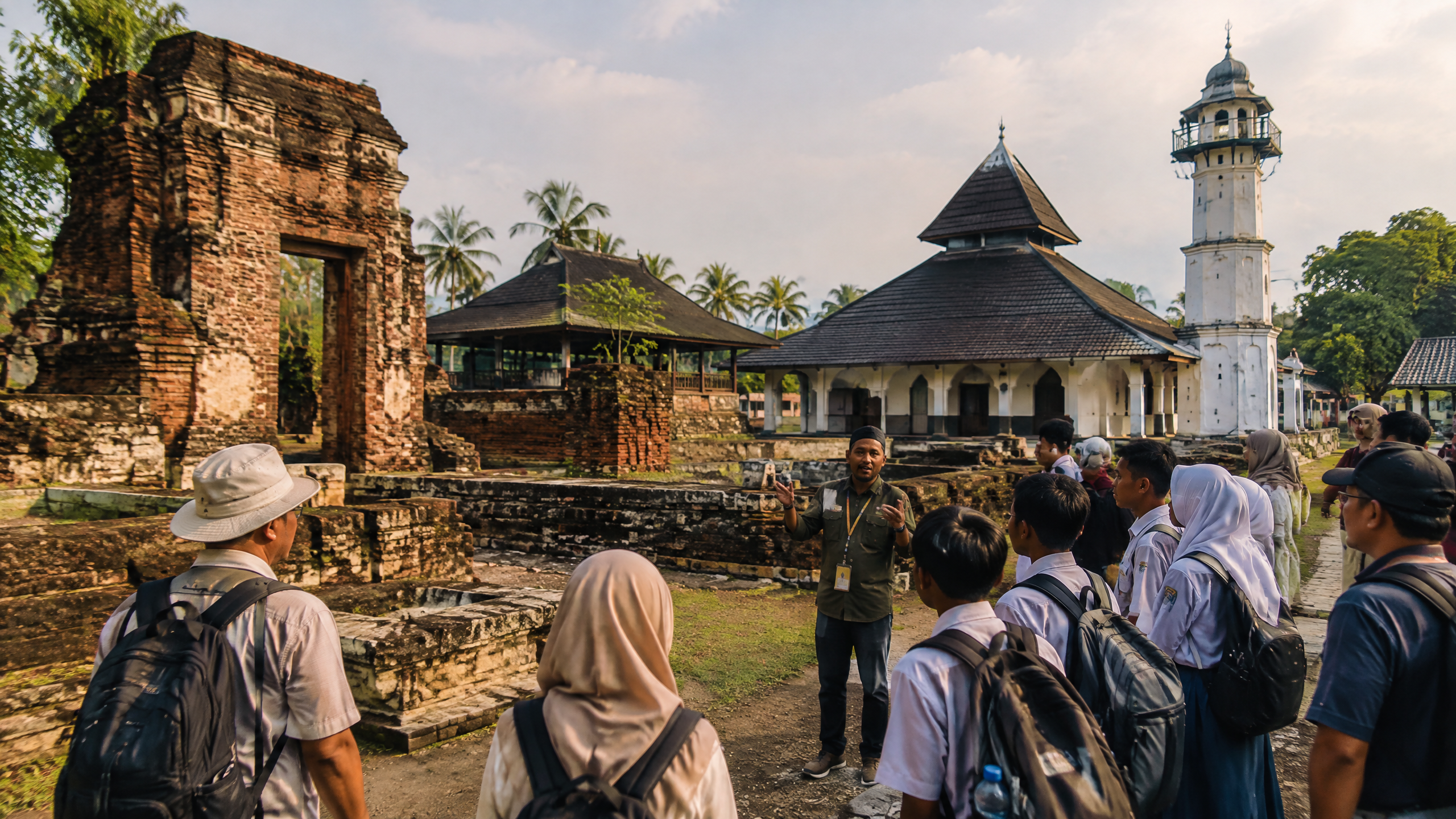
The provincial government’s historical account says the Great Mosque was established in 1566 during the rule of Sultan Maulana Hasanuddin, the first Sultan of Banten. It describes the building as a combination of Javanese, Chinese and European architectural influences, and places it in Desa Banten Lama, about 10 kilometres north of Serang. The same account says the mosque remains a destination for religious, historical, educational and cultural visits, with pilgrims arriving in large numbers during major Islamic occasions.
That continuing use matters. A museum object can be closed while conservation work proceeds; a working mosque cannot be understood only as a monument. Prayer, pilgrimage, funerary visitation and daily stewardship are part of its current meaning. In 2023, the Serang mayor’s legal portal listed a decision formally designating Masjid Agung Banten Lama as a cultural-heritage building. The designation strengthens the case for protection, but it does not erase the mosque’s religious obligations.
Which other living religious site is part of the landscape?
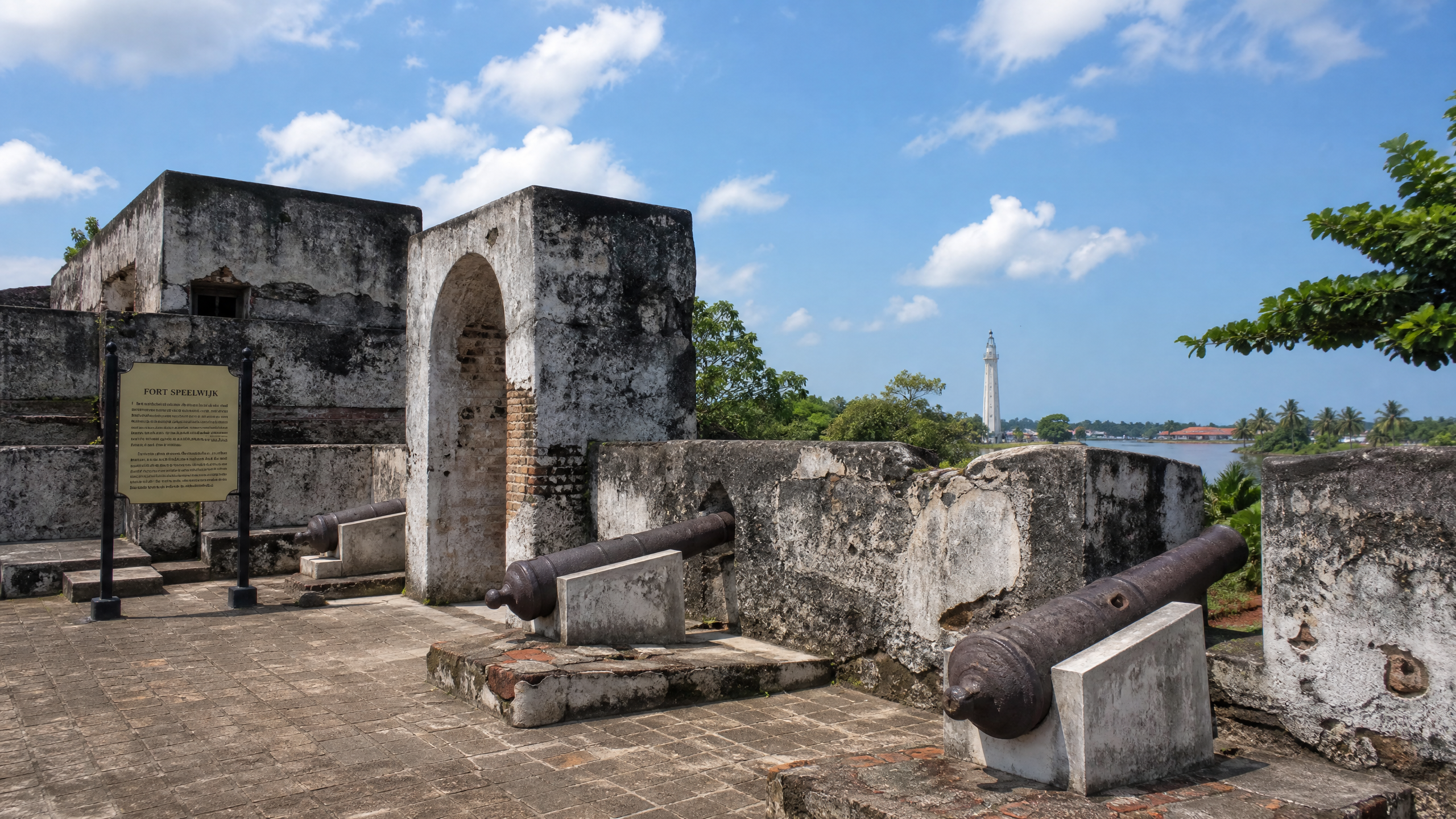
A 2016 analysis by researchers Herry Yogaswara and Tine Suartina recorded a wider heritage area that included Muslim mosques and royal graves, the Buddhist Avalokitesvara Temple, Surosowan Palace, Speelwijk Fortress, Tasikardi Lake and Karangantu Port. The point is not that every site has the same history or governance. It is that Banten Lama is a connected cultural landscape in which different religious communities and visitors use different places.
For preservation policy, that diversity requires more than a single design standard. A mosque, a temple, a palace ruin and a residential edge may need different rules for access, ceremony, repairs, visitor behaviour and commercial activity. The 2016 analysis also warned that the sites had different custodians and management approaches, making coordination central to any long-term plan.
Why are residents and traders now central to preservation?
Visitors create demand for transport, food, souvenirs, religious goods, parking and guiding. The same visitor economy can also produce congestion, waste, informal structures and pressure on entrances. The researchers described the area around the Great Mosque as crowded with kiosks, street traders and beggars, and linked visitor and vehicle movement to pressures on the mosque and nearby sites. These observations date from the research period and should not be read as a verified description of every condition in October 2026.
Government documents show that the issue has been recognised in policy. A Banten provincial report on management said the proposed management body would include central and local government, business, and the local customary-law community. It also referred to the construction of the mosque plaza, arrangements for street vendors and area infrastructure. The 2022 intergovernmental agreement separately included trade, cooperatives and UMKM in its 14 areas of cooperation. In other words, a business can be regulated as part of site management while still being part of the local economic life that revitalisation is supposed to support.
What facts are verified?
- The Banten provincial government, Serang City and Serang Regency announced a joint Banten Lama management agreement on 14 February 2022.
- The agreement covered heritage, tourism, creative economy, education, research, infrastructure, investment, trade, cooperatives and UMKM.
- The Serang City legal portal lists Keputusan Wali Kota Serang Nomor 646/Kep.254-Huk/2023, concerning the designation of Masjid Agung Banten Lama as a cultural-heritage building.
- A Banten provincial account dates the Great Mosque’s establishment to 1566 and identifies its architectural influences as Javanese, Chinese and European.
- Antara reported large Eid-period crowds at the Old Banten mausoleum and Great Mosque in 2017, including an administrator’s expectation of about 15,000 pilgrims at the site and nearby places. That is a historical report, not a current visitor count.
- The 2016 research account identified the Avalokitesvara Temple and other historic sites as part of the wider Banten Lama heritage landscape.
What does “living heritage” mean here?
“Living heritage” means a place whose historical value coexists with continuing social, religious or economic use. In Banten Lama, the term helps explain why preservation cannot focus only on façades, archaeological remains or a visitor photograph. It must also consider worship, pilgrimage, custodianship, local homes, trading spaces, circulation and the rules that connect them.
What do we know, and what remains unclear?
What we know: Banten Lama has a formal heritage-protection framework, an intergovernmental management agreement, a legally listed Great Mosque, and a policy record that recognises customary communities, businesses and street-vendor management. The sources also establish that the area is actively used for worship and pilgrimage and contains religiously diverse sites.
What remains unclear: The sources reviewed do not provide a verified October 2026 progress report on the management body, current vendor numbers, current visitor totals, conservation-condition survey, or a publicly documented final zoning map covering homes and businesses. The 2022 agreement also does not, by itself, show how every decision is implemented on the ground. Those gaps matter because a preservation plan is credible only when residents, custodians and businesses can see clear rules, responsibilities and channels for resolving disputes.
For now, the central lesson is straightforward: Banten Lama cannot be preserved by separating “heritage” from “community.” Its historic meaning survives through religious practice and local livelihoods, so the quality of conservation will depend on whether management protects both the sites and the people who keep the landscape active.
Sources
- https://penghubung.bantenprov.go.id/index.php/berita/kesepakatan-bersama-mengelola-dan-menjaga-banten-lama
- https://jdih.serangkota.go.id/dokumen/keputusan-walikota-keputusan-wali-kota-serang-nomor-646kep254huk2023-tentang-penetapan-masjid-agung-banten-lama-sebagai-bangunan-cagar-budaya
- https://satpolpp.bantenprov.go.id/berita/Mengenal-Sejarah-Masjid-Agung-Banten
- https://diskominfo.bantenprov.go.id/berita/wagub-pengelolaan-banten-lama-libatkan-masyarakat-hukum-adat
- https://satpolpp.bantenprov.go.id/index.php/berita/Revitalisasi-Banten-Lama-tahap-pengembangan-pariwisata
- https://www.insideindonesia.org/editions/edition-125-jul-sep-2016/religious-conflict-and-heritage-management-in-banten-lama
- https://en.antaranews.com/news/111557/thousands-of-pilgrims-crowd-old-banten-area